Why choose Spc Vinyl Plank flooring? The answer begins with changing floor-use expectations. Grand View Research valued the global luxury vinyl flooring market at approximately $18.66 billion in 2023. It also forecasts a 7.4% compound annual growth rate from 2024 to 2030. This growth reflects demand for realistic wood visuals, easier maintenance, and durable residential surfaces. Spc Vinyl Plank combines a rigid polymer core with a printed design layer and protective wear layer. Underfoot, it feels firm, while embossed grain can resemble oak, walnut, or weathered pine.
Performance depends on more than attractive photographs. ASTM F3261 covers resilient flooring with rigid polymeric cores, helping buyers compare suitable product categories. Many SPC products also carry FloorScore certification, administered through SCS Global Services and developed with the Resilient Floor Covering Institute. Such certification can support informed indoor-air-quality decisions, although it does not make every product identical. Check the actual certificate.
Installation can be practical. A click-lock plank may cross a prepared hallway quickly, leaving minimal adhesive odor. Its water-resistant construction suits kitchens, laundry rooms, and busy entryways. However, water can still enter poorly sealed joints or damaged edges. The subfloor must be clean, dry, and reasonably flat. This detail is easy to ignore.
SPC is not a perfect floor. Some rigid planks can transmit footfall noise, feel less warm than wood, or crack when installed over uneven surfaces. I would not choose by thickness alone. Review the wear layer, underlayment requirements, warranty exclusions, emissions documentation, and replacement-plank availability. The strongest choice is not merely attractive. It fits the room, the installer’s experience, and the evidence behind the product.
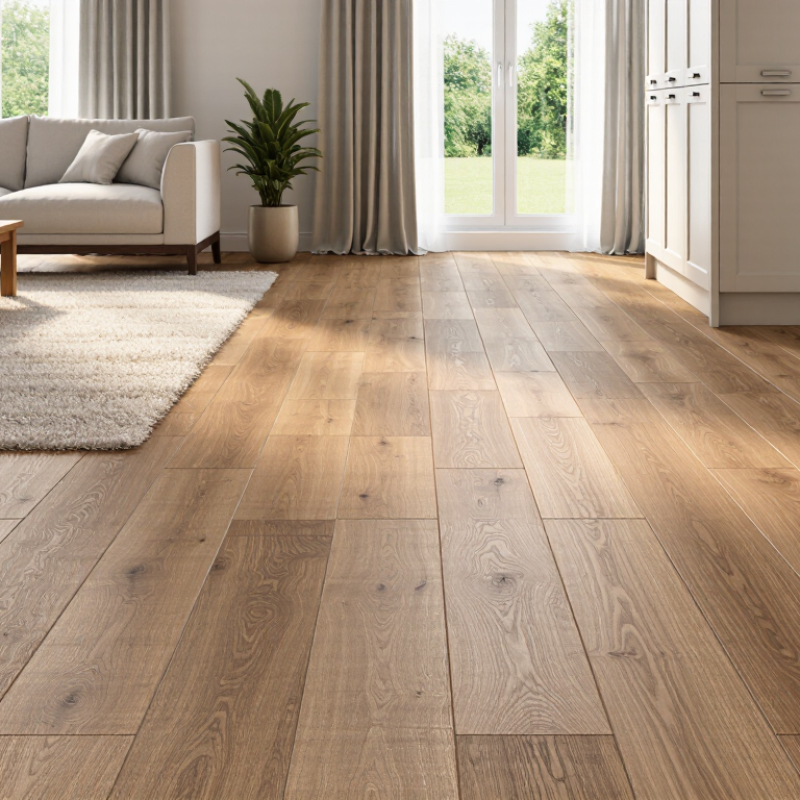
SPC vinyl plank flooring is a multilayer floor covering with a rigid core. SPC means Stone Plastic Composite, describing a core made from mineral filler and polymer materials. This structure gives the plank more stability than many flexible vinyl products. A printed film creates the wood or stone appearance. A transparent wear layer helps resist scratches, stains, and daily scuffing. It feels solid underfoot.
Most SPC planks use click-lock edges, so they can often be installed as a floating floor. The subfloor still needs careful preparation. Dust, moisture, and uneven areas may cause movement or visible gaps. Experienced installers usually check the surface before opening the cartons. They also leave an expansion gap around walls, cabinets, and fixed objects. Without that space, seasonal movement can create pressure.
SPC is water-resistant and practical for kitchens, hallways, and busy living areas. However, “waterproof” should not mean careless installation. Water may still reach the subfloor through open joints or damaged edges. The rigid core can also feel harder and less warm than real timber. Under direct sunlight, some floors may expand, contract, or fade if specifications are ignored. Checking the wear rating, thickness, locking system, and installation instructions is sensible. It is durable, not indestructible.
| Data Dimension | Typical SPC Vinyl Plank Information | Why It Matters |
|---|---|---|
| Definition | SPC stands for Stone Plastic Composite, also called Stone Polymer Composite. It is a rigid-core resilient flooring product made primarily from mineral filler and polymer resin. | The rigid core gives the plank greater structural stability than conventional flexible vinyl flooring. |
| Typical Construction | Wear layer, printed decorative film, SPC rigid core, and a balancing or attached underlayment layer. Some products include a pre-attached foam pad. | Each layer contributes to appearance, abrasion resistance, rigidity, impact performance, or installation comfort. |
| Overall Thickness | Commonly about 4 mm to 8 mm, although specifications vary by product and application. | Thicker planks may provide a more substantial feel and can help accommodate minor subfloor imperfections, but they do not replace proper subfloor preparation. |
| Wear Layer | Common wear-layer thicknesses range from approximately 0.20 mm to 0.55 mm. Heavier-use areas generally require a more durable wear layer. | The wear layer protects the printed design from everyday abrasion, scuffing, and surface wear. |
| Water Resistance | The plank material itself is generally water-resistant and does not readily absorb spills. Water can still enter through seams, edges, or perimeter gaps if installation is not properly completed. | Suitable for many kitchens, bathrooms, laundry areas, and entryways when the product instructions and moisture requirements are followed. |
| Dimensional Stability | The mineral-filled rigid core typically expands and contracts less than many softer vinyl products, but temperature changes can still affect the flooring. | Expansion gaps, room-temperature acclimation, and installation according to the manufacturer’s instructions remain important. |
| Installation Method | Many SPC planks use a floating click-lock system and can be installed without adhesive over approved, clean, dry, and level subfloors. | Floating installation can reduce installation time and makes individual plank replacement easier than with some glued flooring systems. |
| Subfloor Requirements | The subfloor should be structurally sound, clean, dry, and sufficiently flat. Excessive unevenness may telegraph through the finished floor or stress the locking joints. | Proper preparation helps prevent movement, joint separation, hollow spots, and premature wear. |
| Surface Appearance | High-resolution printed films can reproduce wood, stone, and other decorative patterns. Embossed textures may be synchronized with the visual design. | Homeowners can obtain a wide range of visual styles without using natural wood or stone throughout the space. |
| Comfort and Sound | SPC is generally firmer and less cushioned underfoot than flexible vinyl. Attached underlayment may improve comfort and reduce some impact noise. | The floor can feel stable and supportive, but the acoustic result depends on the plank, underlayment, subfloor, and room construction. |
| Maintenance | Routine care generally includes sweeping or vacuuming with a suitable setting and damp mopping with a cleaner approved for resilient flooring. | The non-porous surface is relatively easy to clean, but abrasive tools, excessive water, and unsuitable chemicals should be avoided. |
| Temperature Considerations | Extreme heat, direct sunlight, and rapid temperature changes can affect resilient flooring. Product-specific limits apply, especially for sunrooms and rooms with large windows. | Window coverings, proper expansion gaps, and compliance with installation instructions help reduce movement and thermal stress. |
| Common Applications | Residential living rooms, bedrooms, hallways, kitchens, bathrooms, home offices, and many light-commercial spaces. | Its combination of rigid construction, water resistance, and easy-care characteristics suits a broad range of interior areas. |
| Key Advantages | Rigid construction, realistic decorative options, water-resistant material, relatively simple click installation, and low routine maintenance. | These features make SPC a practical alternative to some laminate, sheet vinyl, flexible vinyl, and natural-material flooring applications. |
| Important Limitations | SPC can feel hard underfoot, may transmit impact sound without suitable underlayment, and can be damaged by sharp objects, heavy point loads, or improper installation. | Selecting the correct wear layer, preparing the subfloor, using protective pads, and following care instructions are essential for long-term performance. |
Note: Dimensions and performance characteristics are typical industry ranges. Always verify the product-specific technical data, installation requirements, warranty terms, and applicable flooring standards before installation.
It combines a rigid stone-polymer core with a protective wear layer. The dense structure feels firm underfoot. It also helps resist dents from chair legs, toy wheels, and daily walking.
Yes, it handles splashes, damp shoes, and routine mopping well. These areas often collect grit and moisture. Wipe spills promptly, especially near open joints and exposed edges.
It can work in these rooms when installation is careful. The flooring resists surface moisture, but it does not replace waterproofing underneath. Poor seams may still allow water entry.
Keep it dry, firm, clean, and reasonably level. An uneven base can create movement or visible gaps. This part is easy to underestimate.
Not always. Its hard core may transmit footsteps without suitable underlayment. A level subfloor and proper underlayment can reduce some noise.
Use a soft broom and a damp mop for regular cleaning. Avoid dragging metal stools across the surface. Place protectors beneath furniture legs.
UV-resistant coatings can help limit fading near windows. Curtains can provide additional protection in bright rooms. Color changes may still happen over many years.
No, it is durable but not indestructible. Heavy impacts, sharp furniture, and neglected moisture can cause damage. Order extra planks for future repairs. Patterns may later disappear from the market.
Spc Vinyl Plank flooring is a modern flooring solution made with a rigid stone-plastic composite core, decorative design layer, and protective wear layer. Its construction gives it excellent dimensional stability, allowing it to resist dents, moisture, and everyday wear better than many traditional flooring options. The manufacturing process combines carefully selected materials under heat and pressure to create durable planks with realistic wood or stone appearances.
Key benefits include easy maintenance, water resistance, comfortable installation, and reliable performance in busy environments. Spc Vinyl Plank can be used in living rooms, bedrooms, kitchens, bathrooms, offices, and retail spaces, provided the subfloor is clean, level, and dry. Before choosing this flooring, consider room conditions, subfloor preparation, plank thickness, surface texture, installation method, sound control, and overall budget. Selecting the right specifications will help ensure long-lasting performance, practical comfort, and a style that suits the space.

 Senli New Material