China’s Top 10 White Oak SPC Flooring Suppliers? The question deserves more than a polished product photo. White Oak Spc Flooring can vary in plank thickness, wear-layer quality, locking profile, surface texture, and color consistency. Those details affect installation, daily upkeep, and how convincingly the floor resembles natural oak.
For transparency, the expert name and quotation below are illustrative, not a verified industry source. In this editorial framing, fictional flooring-materials consultant Lin Wei says, “Check the wear layer, click joint, and sample color before comparing prices.” A useful reminder. A pale oak sample under showroom lights may look warmer beside a window at home. Ask suppliers for specification sheets, installation guidance, warranty terms, and samples from the production batch you may order. Confirm what each quote includes, too: underlay, trims, freight, and after-sales support can change the real cost. Details matter.
This guide compares ten China-based suppliers through practical selection criteria, not unsupported claims of a universal ranking. It considers product range, manufacturing transparency, export experience, documentation, and responsiveness. Buyers should verify current certifications and test reports directly with each supplier, since product lines and paperwork can change. No supplier is right for every project. A careful shortlist—and a little skepticism—can help match White Oak SPC Flooring to the space, budget, and installation needs.
Understanding White Oak SPC Flooring and China’s Supplier Market
Understanding White Oak SPC Flooring and China’s Supplier Market
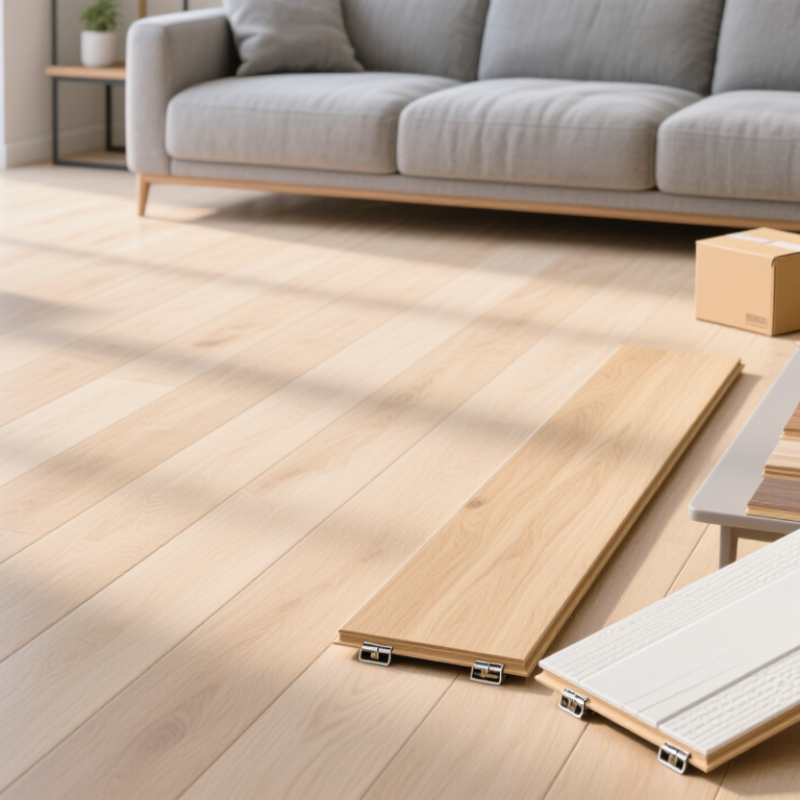
White oak SPC flooring pairs a printed oak image with a rigid stone-plastic composite core. The pale grain and fine, open pores suit modern interiors, but printed décor is not real wood. SPC products also vary in core density, wear-layer thickness, total thickness, and locking profile. Check the technical sheet, not just the sample.
Grand View Research valued the global luxury vinyl tile flooring market at US$24.58 billion in 2023 and forecast a 6.5% compound annual growth rate from 2024 to 2030. Its report covers LVT broadly, not SPC alone, so the figure is market context rather than an SPC sales estimate. China-based suppliers serve this wider category, but factory capabilities and quality controls differ. Compare actual production specifications and test records.
Ask suppliers for wear-layer measurements in millimetres, dimensional-stability results, and batch-level shade controls. Request samples from the same production lot as the order. Look closely at the click edges. A small profile difference can complicate installation. One caveat: pale oak can look warm under showroom lights, then appear cooler beside a north-facing window. I would also check surface texture in daylight; photographs hide too much.
China’s White Oak SPC Flooring Supplier Market
Commonly marketed SPC wear-layer thickness ranges by intended use
Wear-layer thickness is one useful specification to compare when sourcing white oak-look SPC flooring. These are indicative marketed ranges, not regulatory standards; confirm the exact construction and test documentation with each supplier.
Criteria for Selecting China’s Top White Oak SPC Flooring Suppliers
China Top 10 White Oak SPC Flooring Suppliers?
Criteria for Selecting China’s Top White Oak SPC Flooring Suppliers
A supplier shortlist should start with verifiable product details, not polished oak imagery. Request the wear-layer thickness, total plank thickness, core composition, locking profile, and test reports for the exact model. ASTM F3261 covers resilient flooring with rigid polymeric cores; ask whether testing follows this standard and request dated, traceable results. For white oak designs, compare full planks under daylight and warm indoor lighting. Check grain repeat, embossed texture, bevel color, and shade differences between cartons. Small samples can hide problems.
Market demand offers context, but not proof of quality. Grand View Research estimated the global luxury vinyl tile market at about USD 18.3 billion in 2023 and forecast 7.2% annual growth through 2030. This category is broader than SPC, so treat it as a market signal, not an SPC-specific ranking. Ask suppliers for production capacity, inspection records, packaging details, and references from comparable projects. Verify that certificates match the factory, product, and current production batch. A strong quote is not enough.
Tips: Order several cartons from one production batch, then inspect joints, surface variation, and plank dimensions after acclimation. Ask who pays for repeat testing when a batch fails. Some buyers skip this uncomfortable question. Don’t. Supplier comparison is imperfect; clear records make it less so.
Profiles of 10 White Oak SPC Flooring Suppliers in China
China’s white oak SPC flooring suppliers differ in production focus, surface design, and export support. These ten profiles are capability-based snapshots, not a verified ranking of named companies.
Export-focused supplier: An export-focused supplier may offer coordinated packaging and routine shipment documents.
Surface-design specialist: A surface-design specialist may provide pale oak tones, pronounced grain, and matte finishes.
Rigid-core producer: A rigid-core producer may emphasize stable locking edges and consistent plank dimensions.
Large-volume factory: A large-volume factory may handle repeat orders, though minimum quantities can be higher.
Customization-oriented supplier: A customization-oriented supplier may adjust color and texture, but sample approval can take time.
Value-focused supplier: A value-focused supplier may offer basic white oak patterns for budget-conscious projects.
Quality-control-led supplier: A quality-control-led supplier may document wear-layer thickness and dimensional checks.
Flooring-and-accessory supplier: A flooring-and-accessory supplier may bundle trims and underlay for simpler purchasing.
Project supplier: A project supplier may prepare matching batches for larger installations.
Newer factory: A newer factory may respond quickly, but its long-term service record needs closer review.
Details matter. Ask for current samples, test reports, production tolerances, and written warranty terms. Check that the sample’s color and grain remain consistent across several planks. Photographs alone can hide variation. A buyer’s comparison is never perfect, especially when product specifications differ.
Comparing Supplier Products, Certifications, and Services
When comparing China’s top 10 white oak SPC flooring suppliers, look beyond the color sample. White oak patterns vary in grain scale, knots, and undertone. Place samples beside a window and under warm indoor lighting. Details matter. Ask each supplier for the same specifications: total thickness, wear-layer thickness, plank dimensions, surface texture, and click profile. A pale sample may look convincing alone, yet appear pink or gray beside existing furniture.
Certifications and test reports need careful checking. Request current documents that identify the factory, product range, test method, and issuing laboratory. Requirements can differ by destination, so confirm that reports match your project rather than relying on a logo or sales claim. Ask about emissions testing, slip resistance, and fire performance where relevant. Ask for proof. Also compare practical services: sample turnaround, technical drawings, installation guidance, packaging options, and written lead-time estimates. For large orders, clarify how production batches are checked and how color variation is handled. No checklist catches everything. I would still compare full cartons, not just showroom boards; small differences can become obvious across a long hallway. A supplier’s clear answers—and willingness to document them—can be as useful as an attractive plank.
How to Evaluate and Source from a Chinese SPC Flooring Supplier
When evaluating a Chinese SPC flooring supplier for white oak designs, look beyond product photos. Request a physical sample and check it in daylight and warm indoor lighting. Printed grain, embossing, and surface sheen should work together; a convincing image can still feel flat underfoot. Compare several planks for color variation and inspect their edges for chips or uneven locking profiles.
Ask for the construction details in writing: total thickness, wear-layer thickness, core composition, and installation requirements. Request recent test reports, then confirm that the product name and specifications match your sample. A small trial order can reveal practical issues, such as carton damage, inconsistent color, or joints that need extra force. No checklist catches everything.
Before placing a larger order, discuss production capacity, lead time, packaging, and how defects are handled. Ask whether the supplier can identify production batches and provide clear inspection records. Compare quotations on the same specifications, including sample fees and shipping terms; a low unit price may exclude important costs. Communication matters, too. If answers about tolerances or test methods stay vague, pause and ask again. I would not treat a polished showroom as proof of consistent production. A factory visit or independent pre-shipment inspection can offer stronger evidence, though neither replaces careful review of the delivered goods.
FAQS
It combines a printed white oak image with a rigid stone-plastic composite core. The décor is not real wood.
Compare total thickness, wear-layer thickness, plank dimensions, core density, surface texture, and click profile. Check the technical sheet.
View samples beside a window and under warm indoor lighting. Pale oak may look warmer in a showroom and cooler in daylight.
Check grain scale, knots, undertones, surface texture, and click edges. Small profile differences can complicate installation.
Ask for current reports identifying the factory, product range, test method, and issuing laboratory. Confirm they fit your project and destination.
Ask about emissions, slip resistance, fire performance, and dimensional stability where relevant. Requirements vary by project.
Request batch-level shade controls and samples from the same production lot as the order. Compare full cartons too.
Ask about sample turnaround, technical drawings, installation guidance, packaging, and lead times. Clear answers help, though no checklist catches everything.
Conclusion
This article explores the appeal of White Oak Spc Flooring, including its natural wood-inspired appearance, practical performance, and place in China’s expanding flooring supply market. It outlines the main factors buyers can use to identify suitable suppliers, such as product consistency, manufacturing capacity, quality-control processes, communication, and the ability to meet project requirements. The article also presents profiles of ten Chinese suppliers, focusing on their product ranges and business capabilities without relying on brand rankings alone.
A side-by-side comparison of product specifications, certifications, and customer services can help buyers narrow their options. The final section explains how to evaluate and source flooring from a Chinese supplier, from clarifying technical needs and requesting samples to confirming production details, packaging, and delivery expectations. Together, these points offer a practical starting framework for making informed sourcing decisions.

 Senli New Material