Choosing reliable suppliers matters when PVC panels must deliver marble-like appearance, stable performance, and practical installation. This guide introduces the Top 10 PVC Artificial Marble Sheet Suppliers Worldwide, focusing on manufacturers with visible production capabilities, consistent product information, and experience serving international buyers. These suppliers may offer glossy wall panels, fire-resistant options, waterproof surfaces, and customized sizes for hotels, retail spaces, offices, and residential interiors.
Quality is not judged by appearance alone. A convincing Pvc Artificial Marble Sheet should have an even surface, clean edge finishing, dependable thickness, and durable printed patterns. Buyers should also examine technical data, sample performance, packaging quality, and communication after the sale. Factory audits, test reports, and customer references can reveal details that product photos hide. Small flaws matter. A beautiful sheet may still warp if storage conditions are poor.
This overview considers manufacturing experience, design range, export capability, lead times, customization, and service reliability. It also recognizes that supplier rankings are not permanent. Prices, certifications, capacity, and regional policies can change quickly. Some information may require direct confirmation from the supplier. That is an important limitation. The most suitable partner depends on project scale, climate, installation method, and budget. Readers should compare samples carefully before placing large orders. A trusted supplier should answer clearly, document specifications, and accept reasonable quality discussions. The strongest choice is not always the largest company. It is the one that matches real project needs.
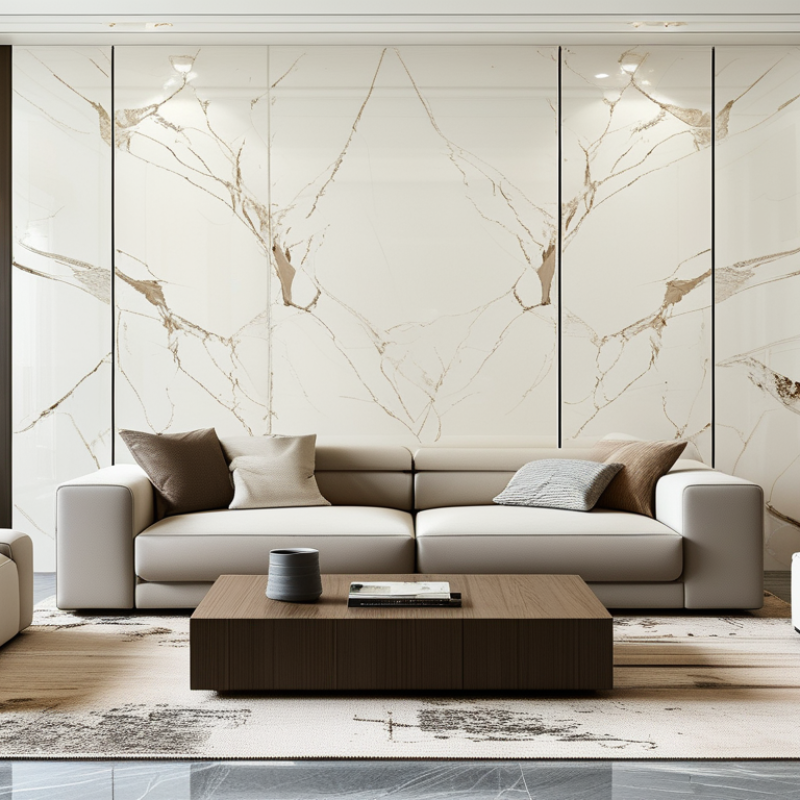
PVC Artificial Marble Sheets: PVC Density of 1.30–1.45 g/cm³ and Core Uses
PVC artificial marble sheets with a density of 1.30–1.45 g/cm³ are widely selected for interior surfaces. This range usually provides a useful balance between rigidity, weight, and handling efficiency. In practice, installers notice the difference during cutting, routing, and wall mounting. Denser sheets often feel firmer under pressure, while lighter sheets may reduce transport effort. Density alone is not enough.
The core uses include bathroom wall cladding, kitchen backsplashes, furniture panels, reception counters, retail displays, and decorative ceilings. Their low water absorption supports use in humid interiors, but exposed joints still require careful sealing. A clean substrate matters. Uneven walls can transfer stress and create visible gaps after installation. Experienced buyers should check thickness tolerance, surface flatness, color consistency, and fire-performance documentation before placing large orders.
When comparing the top 10 PVC artificial marble sheet suppliers worldwide, request recent technical data and physical samples. Check whether the stated density applies to the complete sheet or only its core layer. This detail is easy to miss. Test drilling, edge finishing, and adhesive bonding on a sample first. I have seen attractive sheets perform poorly when installers used unsuitable blades or rushed the curing time. Supplier reliability also depends on stable production, clear packaging, export experience, and responsive technical support. A polished sample does not always represent every batch.
Supplier Ranking Method: Capacity, Export Reach, Certifications, and 2024 Trade Data
Top 10 PVC Artificial Marble Sheet Suppliers Worldwide
Ranking global PVC artificial marble sheet suppliers requires more than a polished catalog. Our method weighs capacity, export reach, certifications, and 2024 trade data. These factors reveal whether a supplier can support regular, international orders.
Capacity came first. We reviewed reported annual output, production lines, mold availability, and delivery consistency. Large capacity matters only when quality remains stable across large batches. Export reach was measured through destination markets, shipment frequency, and documented distribution networks. A supplier serving several regions may manage logistics better, but distance can still increase lead times.
Certifications were checked for validity and relevance. ISO 9001 supports quality management, while environmental and product certifications require closer review. A certificate alone proves little without recent audits and traceable factory records. 2024 trade data added a practical market check. We compared shipment activity, declared volumes, product descriptions, and destination spread. Data sources may differ, and customs records can contain classification errors. This method is not flawless. Some private factories disclose limited figures, while public records may not reflect current production. Buyers should request batch samples, inspection reports, and a clear production schedule before treating any ranking as final.
Top 10 PVC Artificial Marble Sheet Suppliers Worldwide - Supplier Ranking Method: Capacity, Export Reach, Certifications, and 2024 Trade Data
Anonymized supplier comparison based on publicly reported manufacturing information, export coverage, certification disclosures, and 2024 trade-data visibility.
Ranking score: Capacity 30% + Export Reach 25% + Certifications 20% + 2024 Trade-Data Visibility 25%. Supplier names and brands are intentionally omitted.
| Rank |
Supplier ID |
Primary Production Region |
Estimated Annual Capacity
(million m²) |
Export Reach
(markets) |
Documented Certifications |
2024 Trade-Data
Visibility |
Composite Score
(100) |
Data Confidence |
| 1 |
Supplier A |
East China |
8–12 |
60+ |
ISO 9001; ISO 14001; CE; RoHS; SGS test reports |
High |
91 |
High |
| 2 |
Supplier B |
South China |
6–10 |
50+ |
ISO 9001; CE; RoHS; REACH declarations; SGS reports |
High |
87 |
High |
| 3 |
Supplier C |
North China |
5–8 |
45+ |
ISO 9001; ISO 14001; CE; RoHS |
Medium–High |
83 |
Medium–High |
| 4 |
Supplier D |
Central China |
4–7 |
40+ |
ISO 9001; CE; RoHS; product safety test reports |
Medium–High |
79 |
Medium |
| 5 |
Supplier E |
South Asia |
3–6 |
35+ |
ISO 9001; CE; RoHS; third-party quality inspections |
Medium |
75 |
Medium |
| 6 |
Supplier F |
Southeast Asia |
2–5 |
30+ |
ISO 9001; CE; RoHS; REACH declarations |
Medium |
72 |
Medium |
| 7 |
Supplier G |
Eastern Europe |
1.5–3 |
25+ |
ISO 9001; CE; REACH declarations; fire-performance reports |
Medium |
69 |
Medium |
| 8 |
Supplier H |
Middle East |
1–2.5 |
20+ |
ISO 9001; CE; regional conformity documentation |
Limited |
64 |
Medium–Low |
| 9 |
Supplier I |
Latin America |
0.8–2 |
15+ |
ISO 9001; local building-material approvals; test reports |
Limited |
60 |
Medium–Low |
| 10 |
Supplier J |
Africa |
0.5–1.5 |
10+ |
ISO 9001 or equivalent quality system; local conformity documents |
Limited |
55 |
Low |
Data note:
Capacity figures are rounded ranges because privately held manufacturers commonly do not publish audited PVC artificial marble sheet capacity. “2024 Trade-Data Visibility” evaluates the consistency and traceability of publicly accessible shipment or customs records, not a direct statement of total export volume. Certifications should be verified against current certificates, issuing bodies, product scope, and expiry dates before purchasing.
Top 10 Global Suppliers by Region, Production Scale, and Product Portfolio
A credible Top 10 ranking of PVC artificial marble sheet suppliers should compare more than export volume. Regional strength, factory capacity, and product depth reveal practical differences. Asian suppliers often serve high-volume projects with automated lamination, continuous pressing, and broad color collections. Some plants can support container-scale orders, yet buyers should verify batch consistency before signing large contracts. Production scale matters.
European suppliers commonly emphasize surface realism, low-emission materials, and refined architectural finishes. Their portfolios may include stone, concrete, terrazzo, and wood-inspired patterns. North American suppliers often focus on custom dimensions, renovation demand, and responsive technical service. In the Middle East and Africa, regional distributors may provide fast access, project coordination, and climate-aware recommendations. Storage conditions still deserve attention, especially in hot warehouses.
A useful top-ten review should examine sheet thickness, dimensional stability, print clarity, wear resistance, fire performance, and backing quality. Factory audits, recent test reports, and sample comparisons can strengthen purchasing decisions. Portfolio breadth also matters: wall panels, furniture surfaces, bathroom applications, and decorative partitions require different performance priorities. No supplier wins every category. A weakness in many market lists is their reliance on production claims without independent verification. Buyers should question lead times, minimum order quantities, replacement policies, and color variation between batches. Practical experience suggests that reliable communication can matter as much as impressive machinery.
Product Benchmarks: 2–6 mm Thickness, Water Absorption, Fire Rating, and Finish
Top 10 PVC Artificial Marble Sheet Suppliers Worldwide
Thickness changes the installation story. At 2 mm, sheets are light and economical, but uneven walls can show through the finish. At 6 mm, rigidity improves, although cutting and adhesive coverage require more control. The 3–4 mm range often balances handling, impact resistance, and material use. A reliable benchmark checks actual thickness at several points, not only the printed specification. Corners can vary.
Water absorption deserves a test result, not a sales phrase. ASTM D570 data commonly places qualified rigid PVC compounds below 0.5% absorption after 24 hours. For artificial marble sheets, fillers, joints, and unsealed edges can change performance. Therefore, buyers should request full laboratory conditions and sample dimensions. Under ASTM E84, Class A requires a flame-spread index of 0–25 and a smoke-developed index of 0–450. EN 13501-1 uses another classification system, so B-s1,d0 is not automatically equivalent to Class A.
Finish inspection should happen under angled light. Gloss surfaces reveal scratches quickly, while matte textures hide minor handling marks. Stone patterns should remain consistent across adjacent sheets. ASTM D523 can support gloss measurement at a defined angle, commonly 60 degrees. A supplier sample may look excellent. Batch consistency is harder. One useful weakness in this benchmark is that appearance remains partly subjective; color, texture depth, and edge quality still need physical approval before purchasing.
Buyer Verification: ASTM, EN, ISO Compliance, MOQ, Lead Time, and Pricing Metrics
Top 10 PVC Artificial Marble Sheet Suppliers Worldwide
Comparing ten PVC artificial marble sheet suppliers requires more than attractive surface photographs. Request current ASTM and EN test reports for fire behavior, dimensional stability, impact resistance, and chemical performance. ISO certification should cover the supplier’s management system, not automatically prove product quality. Check the certificate number, issuing body, scope, and expiration date. Some documents look convincing but cover another factory or product line.
Ask for a physical sample before approving a purchase. Examine the gloss, printed veins, edge finish, thickness tolerance, and backing layer under ordinary warehouse lighting. A reliable supplier should provide batch numbers, inspection records, and clear production photos. Confirm the MOQ in square meters, carton size, loading plan, and available colors.
Lead time must include artwork approval, material preparation, production, inspection, and export packing. “Ready stock” may only mean unfinished boards.
Pricing needs careful comparison. Request a full quote covering tooling, samples, packaging, inland delivery, testing, and payment terms. Compare the price per usable square meter, not merely per sheet. I once focused too heavily on the lowest offer and ignored inconsistent thickness. That mistake affected installation waste and delivery timing. A stronger review uses at least three quotations, one approved sample, and a written tolerance sheet. Keep communication records, because verbal promises can become unclear when specifications change. Supplier claims deserve verification, even when the sales team responds quickly.
FAQS
Common sheets measure 1.30–1.45 g/cm³. Denser sheets feel firmer, while lighter sheets reduce carrying effort. Density alone proves little.
They suit bathroom walls, kitchen backsplashes, furniture panels, reception counters, retail displays, and decorative ceilings. Humid interiors are acceptable when joints are sealed carefully.
Sheets from 2–6 mm are common. Two-millimeter sheets are lighter, but uneven walls may show through. The 3–4 mm range often balances handling and rigidity.
Measure several points on each sample, including corners. Printed specifications may not reflect actual thickness. Corners can vary.
Request recent technical data, physical samples, packaging details, and production information. Confirm whether density describes the full sheet or only its core.
Low absorption supports humid applications, but fillers and unsealed edges can change performance. Request laboratory results with test conditions and sample dimensions. Sales language is not enough.
Ask for complete test reports and the applicable standard. A Class A result under one system is not automatically equal to B-s1,d0 under another.
Inspect samples under angled light. Check scratches, gloss, texture depth, edge quality, and pattern alignment. One attractive sample may not represent every batch.
Uneven substrates can create stress and visible gaps. Unsuitable blades may damage edges. Adhesive curing should not be rushed. I have seen this go wrong.
Compare thickness tolerance, flatness, color consistency, wear resistance, backing quality, lead time, minimum order quantity, and replacement policies. Machinery looks impressive, but communication matters too.
Conclusion
This guide provides a practical overview of the global Pvc Artificial Marble Sheet market, focusing on material characteristics, applications, and supplier evaluation. With a typical PVC density of 1.30–1.45 g/cm³, these sheets are commonly used for interior wall panels, ceilings, furniture surfaces, partitions, and decorative renovation projects. The article explains how suppliers can be compared through production capacity, export coverage, certifications, and relevant 2024 trade data, while also reviewing leading producers by region, manufacturing scale, and product range.
It also outlines key product benchmarks, including 2–6 mm thickness options, water absorption, fire performance, surface finishes, and consistency standards. For responsible purchasing, buyers should verify ASTM, EN, and ISO compliance, request clear information about minimum order quantities, lead times, quality control, and pricing structures. These checks help purchasers select suitable materials for performance, budget, and project requirements without relying solely on promotional claims.

 Senli New Material