What Is Slip Resistant Vinyl Flooring and Is It Durable?

Time:2026-10-20 Author:Oliver
0%

When people choose flooring, safety often begins underfoot. Slip Resistant Vinyl Flooring is designed to improve traction where water, spills, or smooth shoes create risk. Its textured surface can feel subtly different, especially beside polished tile. That small detail matters in kitchens, bathrooms, hallways, and commercial entrances. But “slip resistant” does not mean slip proof. Real conditions change.

This guide examines how the flooring creates grip, how durability is measured, and where performance may weaken. We will consider wear layers, surface texture, installation quality, cleaning routines, and moisture exposure. Manufacturer test data can provide useful evidence, but laboratory results cannot reproduce every household. A wet footprint, loose rug, or poorly sealed seam may change the experience. Practical observation matters too. Products with similar appearances can behave differently under heavy traffic. That distinction is easy to miss.

Reliable advice should balance product claims with accepted testing methods, warranty language, and site conditions. A thicker wear layer often supports longer service, yet thickness alone cannot guarantee lasting performance. Subfloor movement, grit, furniture legs, and harsh cleaners can accelerate damage. Even careful recommendations have limits. Flooring decisions depend on traffic, maintenance, budget, and the people using the space. This discussion will help readers compare options honestly, rather than assume the most expensive surface is automatically the safest or strongest choice.
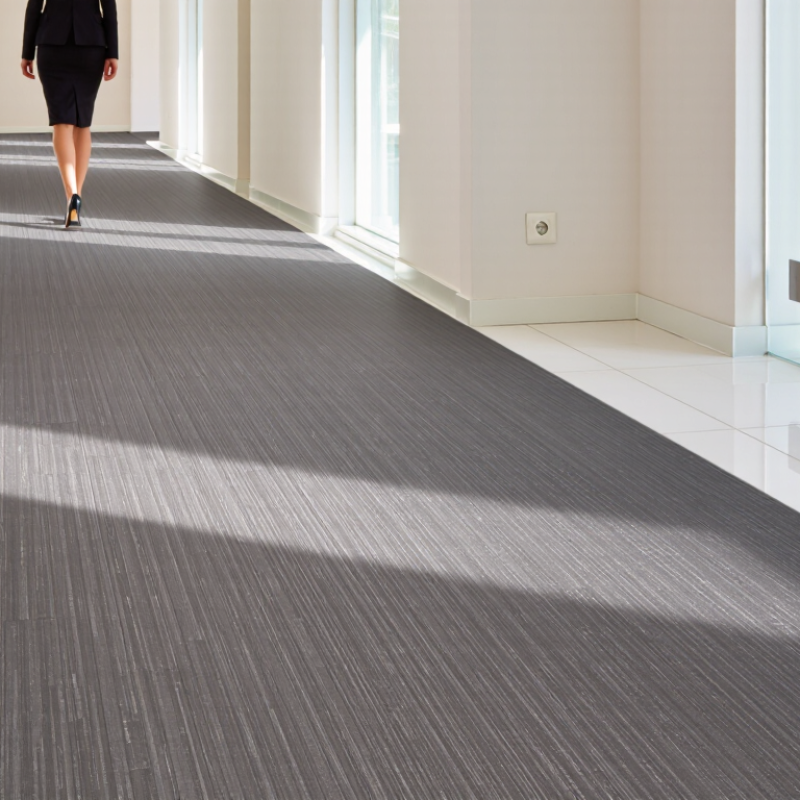
What Is Slip Resistant Vinyl Flooring and Is It Durable?

What Is Slip-Resistant Vinyl Flooring?

Slip-resistant vinyl flooring is resilient flooring designed to reduce sliding underfoot. It usually combines a textured wear layer with embossed patterns or mineral particles. These features create more contact between shoes and the floor, especially around kitchens, bathrooms, and entrances. It is not slip-proof. Water, grease, soap, loose dust, and unsuitable footwear can still cause accidents.

The World Health Organization reports that falls cause about 684,000 deaths worldwide each year. It also estimates that 37.3 million falls require medical attention annually. These figures explain why surface traction deserves more than a marketing label. ANSI A326.3 evaluates wet dynamic coefficient of friction for applicable hard-surface flooring. A value near 0.42 is commonly referenced for level interior areas. However, test results do not predict every real-world condition. A wet shoe on a heavily textured floor can behave differently.

In practical use, durable slip-resistant vinyl should resist scuffs, indentation, moisture, and repeated cleaning. ASTM F1303 covers performance requirements for sheet vinyl flooring, including dimensional stability and flexibility. A thicker wear layer generally handles busy corridors better than a thin residential surface. Still, thickness alone is not proof of long service life. I have seen textured floors lose traction when oily residue filled their grooves. Daily sweeping, prompt spill removal, and neutral cleaning products matter. The disappointing part is simple: poor maintenance can defeat good flooring.

How Slip-Resistant Vinyl Flooring Prevents Accidents

Slip-resistant vinyl flooring is designed to reduce sliding when shoes meet moisture, dust, or small spills. Its surface contains fine texture that increases traction underfoot. Some products also use a slightly cushioned backing, which can improve comfort and reduce sudden foot movement. It is not magic. A wet, greasy surface can still become dangerous.

In site inspections, I look closely at entrances, bathrooms, kitchens, and healthcare corridors. These areas collect water and experience frequent foot traffic. A textured finish helps shoes grip instead of skidding across a smooth film of water. Welded seams and properly sealed edges also matter. They limit moisture from reaching the subfloor, where lifting or uneven areas may create trip hazards. Clear lighting helps people notice spills before stepping on them.

Durability depends on more than the flooring material. A strong wear layer can resist scratches, scuffs, and repeated cleaning. Correct adhesive application prevents bubbles and loose sections. Regular sweeping removes grit that can slowly wear the texture down. Spills should be cleaned quickly, even when the floor is labeled slip resistant. Cleaning products also need care; residue may leave a slippery coating. I have seen durable floors perform poorly after rushed installation or unsuitable maintenance. That detail is easy to overlook. Erotiske

What Materials and Features Improve Its Slip Resistance?

Slip-resistant vinyl flooring uses surface design and material engineering to improve traction underfoot. Its core usually contains flexible PVC, while the upper wear layer protects against scuffs, moisture, and repeated traffic. A lightly textured surface can create tiny contact points beneath shoes, reducing the sliding effect caused by water or spills.

Some products include mineral particles, such as aluminum oxide, within the wear layer. These particles can increase abrasion resistance, but they may also make the floor feel less smooth. Embossed patterns are another useful feature. They guide liquid away from the walking surface instead of allowing a thin film to sit between the shoe and vinyl. However, deeper textures can trap dirt and require more careful cleaning.

In kitchens, clinics, and entrance areas, look for tested slip-resistance performance rather than vague claims. Wet pendulum testing and coefficient-of-friction measurements offer more reliable comparisons, although test results can vary by method and footwear. A thicker wear layer usually supports longer service life, especially beneath carts or office chairs. Heat-welded seams can also limit moisture entry. Maintenance still matters. Grease can defeat good texture. It is not magic.

From practical flooring inspections, damaged edges and worn patterns often reduce safety before the vinyl itself fails. Some textured floors also become slippery when cleaning chemicals leave a residue. That detail is easy to miss. Choosing suitable footwear, removing spills quickly, and following the flooring maker’s cleaning guidance may matter as much as the material specification.

How Durable Is Slip-Resistant Vinyl Flooring?

Slip-resistant vinyl flooring can be surprisingly durable in busy homes, clinics, and small shops.
In my flooring inspections, the surface usually stays attractive when its wear layer matches daily traffic. A thicker wear layer resists scuffs, grit, and repeated rolling loads better than a thin residential layer. It is not indestructible. Sharp furniture feet, dragged appliances, and trapped sand can still leave marks. The textured finish improves traction, but it may hold fine dirt in its shallow pattern.

Durability also depends on installation. A clean, level subfloor prevents hollow spots, seam stress, and premature separation. Moisture testing matters before installation, especially over concrete. Poorly sealed edges can allow water beneath the flooring, causing odor or subfloor damage. That failure is often blamed on vinyl, unfairly. Routine care is simple: remove grit with a soft broom, wipe spills promptly, and use non-abrasive cleaners suitable for vinyl surfaces. Avoid rubber-backed mats unless their backing is confirmed compatible.

Under moderate household use, quality slip-resistant vinyl can remain serviceable for many years.
Heavy commercial traffic demands a stronger wear layer and more frequent inspections. Rolling loads deserve attention. A loaded cart can damage edges faster than ordinary footsteps. I have seen floors age unevenly near entrances because grit was ignored. Replacement may eventually become practical, but localized repairs are not always invisible. Color, texture, and lighting can reveal a patch. That is an imperfect compromise, yet regular cleaning and sensible furniture protection often extend the floor’s useful life.

How to Maintain and Evaluate Its Long-Term Performance

Slip-Resistant Vinyl Flooring: Durability and Long-Term Care

How to Maintain and Evaluate Its Long-Term Performance

Slip-resistant vinyl flooring uses a textured surface to improve traction underfoot. It is commonly installed in kitchens, bathrooms, corridors, and healthcare spaces. Its safety depends on more than the flooring itself. Water, grease, dust, and worn shoes can reduce grip quickly. The protection is not permanent. Heavy foot traffic may gradually smooth the texture, especially near entrances and workstations.

Daily maintenance should begin with sweeping or vacuuming loose grit. Grit acts like sandpaper under moving shoes. Clean spills immediately with a neutral, manufacturer-approved cleaner and a damp mop. Avoid harsh solvents, abrasive pads, and excessive water around seams. Place absorbent mats at entrances, but inspect them often. A dirty mat can spread contamination instead of preventing it. Cleaning records also help identify recurring problems.

Evaluate the floor under bright, angled light every few months. Check for polished patches, raised edges, open seams, discoloration, and areas that remain slippery after cleaning. A floor may look clean and still have reduced traction. Test questionable areas with suitable professional equipment rather than relying only on touch. Review cleaning chemicals and traffic patterns before blaming the material. Installation quality matters too; uneven subfloors can cause premature wear. No inspection is perfect, so document small changes with dated photographs and reconsider the maintenance schedule when conditions change.

What Is Slip Resistant Vinyl Flooring and Is It Durable? - How to Maintain and Evaluate Its Long-Term Performance

Evaluation Dimension Typical Information What It Means for Performance Recommended Check
Basic Definition Vinyl flooring with a textured surface, embossed wear layer, or coating designed to increase traction when the floor is dry or exposed to limited moisture. The flooring can reduce the likelihood of slipping, but it cannot eliminate risk, especially when contaminants such as oil, soap, or grease are present. Confirm the product’s tested slip-resistance information and intended use rather than relying only on the term “slip resistant.”
Common Product Forms Luxury vinyl tile or plank, homogeneous sheet vinyl, heterogeneous sheet vinyl, and safety vinyl with enhanced surface particles or embossing. Sheet products have fewer seams, while planks and tiles can simplify localized replacement. Safety vinyl generally provides a more aggressive texture. Match the format to the environment, cleaning method, moisture exposure, and expected repair requirements.
Slip-Resistance Testing Testing may refer to standards such as EN 13845, EN 16165, ASTM F1679, or ANSI A326.3, depending on the market and test method. Test results are method-specific. A value from one method should not be directly compared with a value from another method without understanding the test conditions. Request the full test method, wet or dry condition, contaminant used, direction of testing, and classification or rating.
Surface Texture Embossing, mineral particles, raised patterns, and matte finishes can increase mechanical grip compared with a smooth, glossy surface. More texture may improve traction but can also retain dirt and require more detailed cleaning. Inspect the balance between traction, cleanability, comfort, and suitability for wheeled traffic.
Wear-Layer Thickness Residential and light-commercial vinyl commonly uses wear layers around 0.15–0.55 mm; heavy-commercial products may use approximately 0.55–1.00 mm or more. A thicker wear layer generally provides greater resistance to abrasion, scuffing, and pattern wear, although construction and maintenance also matter. Compare the declared wear-layer thickness with the expected traffic level and warranty conditions.
Expected Service Life A well-installed vinyl floor may provide roughly 10–20 years of service in many residential or moderate commercial applications; actual life varies significantly. Traffic intensity, rolling loads, sunlight, moisture, subfloor movement, cleaning chemicals, and maintenance frequency can shorten or extend useful life. Evaluate visible wear, seam condition, dimensional stability, and surface performance instead of using age alone.
Water and Moisture Performance Vinyl itself has low water absorption, but seams, joints, edges, adhesive, and the subfloor can still be vulnerable to moisture intrusion. Good moisture resistance does not correct an uneven, damp, or poorly prepared subfloor. Check moisture-test results, seam integrity, perimeter detailing, and the installation requirements before use in wet areas.
Resistance to Staining and Chemicals Many vinyl surfaces resist common household spills, but strong solvents, rubber migration, dyes, oils, and concentrated disinfectants may cause discoloration or damage. Chemical compatibility depends on the product construction, exposure time, concentration, and whether the spill is removed promptly. Use only cleaning agents approved in the technical data or maintenance instructions, and remove spills as soon as practical.
Routine Cleaning Regular dust removal followed by damp mopping with a neutral-pH cleaner is commonly recommended for vinyl flooring. Removing grit helps reduce abrasive wear, while controlled moisture helps prevent slippery cleaning residues. Use clean water, suitable dilution, non-abrasive tools, and enough drying time to avoid residue or standing water.
Dirt and Grease Control Loose grit can act as an abrasive, while grease, soap film, and polish residue can reduce traction. A slip-resistant surface may perform poorly if contaminants form a continuous film over the texture. Install entrance mats where appropriate, clean high-traffic zones more frequently, and avoid unapproved wax or polish.
Installation Quality A flat, dry, clean, and structurally sound subfloor is essential. Adhesive selection, seam welding, acclimatization, and expansion provisions may also be important. Poor installation can cause lifting, gaps, bubbling, telegraphing, seam failure, and premature wear even when the flooring material is durable. Inspect the subfloor preparation, moisture controls, seam details, and compliance with the installation instructions.
Rolling Loads and Furniture Heavy carts, narrow casters, dragged furniture, and concentrated loads can dent, scratch, or separate flooring. Durability depends on load distribution, caster design, traffic frequency, and whether protective pads are used. Use suitable wide, clean casters or protective glides and lift rather than drag heavy items.
Sunlight and Temperature Direct ultraviolet exposure can contribute to fading, while excessive heat or temperature variation may affect dimensional stability. Long-term appearance and joint performance may decline in areas with intense sunlight or uncontrolled temperature changes. Review exposure limits, use suitable window coverings where needed, and maintain stable indoor conditions.
Long-Term Condition Indicators Relevant signs include loss of texture, glossy wear paths, deep scratches, discoloration, curling edges, open seams, bubbles, and persistent staining. These conditions can indicate reduced appearance, compromised moisture protection, or a need for localized repair or replacement. Record inspection findings by location and compare high-traffic areas with low-traffic reference areas.
Overall Durability Assessment Slip-resistant vinyl flooring is generally durable for many residential, healthcare, hospitality, retail, and light-commercial applications when correctly specified, installed, and maintained. Durability is a system result involving the product, subfloor, installation, traffic, contaminants, cleaning practices, and environmental conditions. Assess test documentation, wear-layer construction, installation quality, maintenance history, and observed field performance together.

Note: Performance ranges and testing references are general industry information. Always verify the current technical data, installation instructions, maintenance requirements, and applicable local standards for the specific flooring product and application.

FAQS

What materials help slip-resistant vinyl flooring grip better?

Flexible PVC supports the floor’s core. A textured wear layer creates tiny contact points under shoes. Mineral particles may improve abrasion resistance. However, they can make the surface feel less smooth.

How do embossed patterns reduce slipping?

Embossed patterns can guide water away from walking areas. This reduces the thin film between footwear and flooring. Deep patterns may trap dirt. Cleaning becomes more demanding.

What performance information should buyers check?

Look for wet pendulum testing and coefficient-of-friction results. These tests offer better comparisons than vague safety claims. Results can vary with footwear and testing methods. No single number tells the whole story.

How durable is slip-resistant vinyl flooring?

Quality flooring can last many years under moderate household use. A thicker wear layer handles grit, scuffs, and rolling loads better. Sharp furniture feet can still cause damage. It is not indestructible.

Does installation affect long-term durability?

Yes. A clean, level subfloor helps prevent hollow spots and seam stress. Moisture testing matters over concrete. Poorly sealed edges may allow water underneath. That failure is not always the vinyl’s fault.

How should slip-resistant vinyl flooring be cleaned?

Sweep or vacuum loose grit regularly. Grit acts like sandpaper beneath moving shoes. Wipe spills quickly with a suitable neutral cleaner. Avoid harsh solvents, abrasive pads, and excess water near seams.

Can cleaning chemicals make the floor slippery?

Yes, residue from cleaning chemicals can reduce traction. A floor may look clean but still feel unsafe. Review the cleaner and dilution before blaming the material. This detail is easy to miss.

How can owners evaluate the floor’s condition?

Inspect it every few months under bright, angled light. Check for polished patches, raised edges, open seams, and discoloration. Questionable areas need professional testing. No inspection is perfect.

Do entrance mats and footwear affect safety?

They can affect safety as much as the floor specification. Use absorbent entrance mats and inspect them often. Dirty mats may spread grit or contamination. Suitable footwear also improves traction.

Can damaged areas be repaired invisibly?

Local repairs may extend useful service life. Color, texture, and lighting can reveal a patch. Replacement is sometimes more practical. It is an imperfect compromise.

Conclusion

Slip Resistant Vinyl Flooring is designed to provide a safer walking surface in areas where moisture, spills, or frequent traffic may increase the risk of slipping. Its textured wear layer helps improve traction by giving shoes more grip, while a resilient vinyl core offers comfort, flexibility, and resistance to everyday wear. Some products may also include embossed patterns, protective coatings, or specially engineered surfaces that support better performance in wet or high-use environments.

When properly selected and installed, Slip Resistant Vinyl Flooring can be highly durable and maintain its appearance for many years. Its long-term performance depends on factors such as material thickness, surface protection, installation quality, and the level of foot traffic. Regular sweeping, prompt spill removal, and gentle cleaning with suitable products help prevent scratches, stains, and buildup. Periodic inspection can also identify lifted edges, surface damage, or areas where traction has decreased, allowing timely maintenance and helping the flooring remain safe and functional.


Oliver

Oliver

Oliver is a seasoned marketing professional with a wealth of expertise in driving brand awareness and engagement. With a deep understanding of our company's product offerings, he consistently delivers high-quality content that enriches our professional blog. His insights not only shed light on......