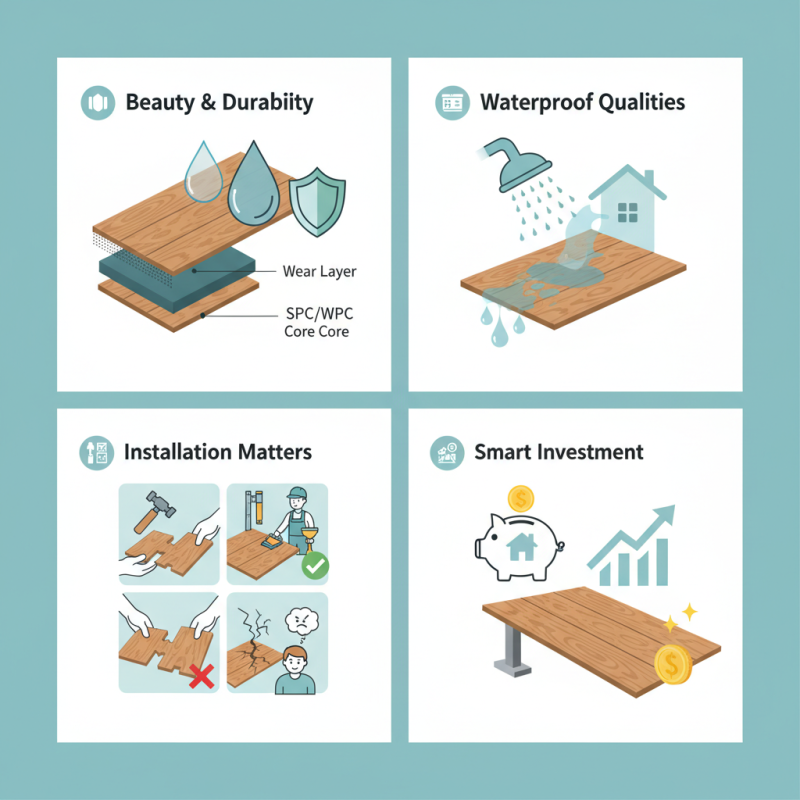
Choosing the right flooring for your home can be challenging. Spc Wpc flooring stands out as a popular choice among homeowners. According to Mark Johnson, an industry expert in flooring solutions, "The key to great flooring is finding the right balance between beauty and durability." This rings especially true when considering Spc Wpc flooring.
Spc Wpc flooring offers a perfect blend of luxury and resilience. It mimics the look of hardwood while providing waterproof qualities. In spaces prone to moisture, this can be a game-changer. As you delve into the selection process, remember that what's popular might not be right for your needs.
Many homeowners overlook the importance of installation. Some might assume they can easily lay the flooring themselves. However, improper installation can lead to long-term frustrations. Reflecting on personal experiences may help others avoid costly mistakes. Selecting Spc Wpc flooring is not just about aesthetics; it's about making a smart investment for your home.
SPC and WPC flooring are popular choices for homeowners seeking durable and stylish options. SPC (Stone Plastic Composite) has a core made of a mixture of stone powder and PVC. This combination provides enhanced stability and resistance to moisture. In contrast, WPC (Wood Plastic Composite) features a softer core made of wood fibers, making it lighter but also more sensitive to moisture.
Both types of flooring have their unique benefits. SPC is known for its waterproof characteristics, making it ideal for bathrooms and kitchens. According to industry data, SPC flooring can withstand heavy foot traffic and is better suited for commercial use. WPC flooring, on the other hand, offers better sound insulation. This quality makes it a popular choice for homes in bustling neighborhoods.
Tips: Consider your climate. If your area experiences high humidity, SPC may be the more suitable choice. Assess the installation method you'll use as well. Both features easy click-lock installation, but ensure your subfloor is prepared correctly. A well-prepared subfloor is crucial for long-term performance. Reflect on where you spend the most time in your home to make an informed decision.
Choosing SPC flooring for your home involves several important factors. The first is durability. SPC flooring is known for its resilience. It can withstand heavy foot traffic and resist scratches. However, not all SPC products are created equal. Look for thicker wear layers for better protection.
Next, consider the look. SPC flooring comes in various designs and colors. Some mimic natural wood or stone. Think about your existing decor. Choosing a color that complements your space is crucial. Darker shades can add warmth, while lighter colors may create an airy feel.
Finally, installation is key. Some SPC flooring options are easier to install than others. A click-lock system can save time and effort. However, not everyone is a DIY expert. Hiring a professional might be necessary, adding to the cost. Weigh the pros and cons of self-installation vs. professional help carefully.
When choosing WPC flooring for your home, consider several important factors. Start with the thickness of the planks. Thicker planks offer better durability and feel. Look for options in the 5-8 mm range. Examine the wear layer as well; a thicker wear layer provides more protection against scratches and damage.
Color and design are also crucial. You want a style that complements your home’s decor. Neutral tones can create a warm atmosphere, while bold colors add personality. Check if the texture feels realistic underfoot. Some finishes can look cheap, causing regret after installation.
Pay attention to installation methods. Some options require glue, while others come as snap-lock planks. If you're not handy, you might face challenges. Price is another consideration. Higher-quality options tend to be more costly, but a lower price may mean compromises on quality. Be wary of deals that seem too good to be true; they often are.
| Factor | Description | Importance | Recommended Options |
|---|---|---|---|
| Durability | Resistance to wear, scratches, and impacts | High | WPC with a thick wear layer |
| Water Resistance | Ability to withstand moisture and spills | High | 100% waterproof options |
| Comfort | Soft underfoot, reduces noise | Medium | Cork-infused WPC |
| Aesthetics | Variety of colors and designs to match home decor | High | Wood-look finishes, various textures |
| Installation | Ease of DIY installation vs. professional installation | Medium | Click-lock systems |
When installing SPC and WPC flooring, preparation is key. Start with a clean, level surface. Remove old flooring if necessary. Any imperfections could affect the new flooring. Make sure to acclimate the planks to the room temperature and humidity for at least 48 hours. This helps prevent unwanted expansion or contraction. Check local installation guidelines for specific requirements.
Maintenance is essential for longevity. Regular sweeping keeps dirt and dust at bay. Use a damp mop for deeper cleaning, but avoid excessive water. It can warp the planks. As time goes on, inspect for scratches or dents. These can often be repaired with filler, but sometimes replacement is necessary. Reflect on your choices. Consider your lifestyle when selecting flooring types. Not every option suits every home.
When considering SPC (Stone Plastic Composite) and WPC (Wood Plastic Composite) flooring, design and aesthetics play a critical role. Both options come with a variety of colors and textures, appealing to different tastes. SPC offers a sleek, modern look with a range of stone-like finishes. On the other hand, WPC provides a warmer, more organic feel, mimicking natural wood grain. According to industry reports, over 70% of homeowners prioritize design flexibility when selecting flooring.
Tip: Evaluate your home's existing decor. This ensures your new flooring complements the overall aesthetic.
Color selection is essential. Light colors can make a space feel larger and brighter, while darker tones add depth and sophistication. Textured finishes can reduce slips but may also show dirt more easily. Some homeowners struggle with this balance, especially in high-traffic areas. Aim to define an atmosphere that matches your lifestyle. Reports indicate that 65% of consumers regret their original color choices after installation.
Tip: Request samples before you decide. Physical samples help visualize how the floor integrates with your space.
Selecting flooring isn't just practical; it's also about creating an inviting environment. Consider both current trends and your long-term desire for durability. Reflect on how the floors will impact your daily routines. The right choice requires deep thought, and it’s a journey worth taking.
: Thicker planks, around 5-8 mm, offer better durability and a more solid feel.
A thicker wear layer provides more protection against scratches and daily damage.
Color affects the ambiance. Light tones brighten spaces; dark tones add depth.
Consider your skills. Some floors require glue, while others use a snap-lock system.
Higher-quality options are often more expensive. Low prices may mean lower quality.
Think about existing decor and how the new flooring complements your home style.
Samples help you visualize how the flooring will fit with your space before commitment.
Many consumers wish they had chosen different colors, reflecting on their choices.
Textured finishes may enhance safety but can show dirt more easily, especially in busy areas.
Not considering how the flooring will fit into daily routines can lead to dissatisfaction.
In the article "2026 How to Choose SPC WPC Flooring for Your Home?", readers are guided through the essential aspects of selecting the right flooring for their living spaces. The article begins by clarifying the differences between SPC (Stone Plastic Composite) and WPC (Wood Plastic Composite) flooring, highlighting their unique benefits such as durability, waterproof characteristics, and comfort.
When choosing between SPC and WPC flooring, factors like room usage, climate, and personal style play a significant role. Additionally, the article covers important considerations for installation and maintenance, ensuring longevity and aesthetic appeal. Homeowners are also presented with a variety of design options, allowing them to select SPC or WPC flooring that complements their decor while offering practicality. Overall, the article serves as a comprehensive guide for making an informed decision on SPC WPC flooring for any home.

Senli New Material