Choosing the right Spc Staircase in 2026 requires more than comparing colors, prices, or glossy showroom photographs. Stone plastic composite can offer dimensional stability, water resistance, and a hard-wearing surface. However, performance depends on the complete system. The core, tread profile, nosing, adhesive, subfloor, and installation method all matter.
Grand View Research valued the global resilient flooring market at approximately USD 41.7 billion in 2023. Its 2024 analysis also projects continued growth through 2030. Mordor Intelligence identifies residential renovation and waterproof flooring as important demand drivers. These figures support market confidence, but they do not guarantee a safe staircase. A report about flooring is not a staircase test.
Edward Steinfeld, a leading universal-design scholar, states, “Universal design is an approach to design that accommodates the widest possible range of users.” That principle should guide every Spc Staircase decision. Look closely at the first and last steps. Check whether the nosing remains visible under warm lighting. Test the surface with dry and slightly damp footwear. Small details matter.
A reliable selection should include documented slip-resistance information, wear ratings, fire-performance data, and installation guidance. Ask whether replacement treads remain available after several years. Ask again. Some products appear convincing but provide limited technical evidence. That weakness deserves attention.
This guide compares construction, safety, maintenance, appearance, and long-term value. It also recognizes an uncomfortable truth: the cheapest staircase may become the most expensive after movement, edge damage, or difficult repairs. Good design is rarely dramatic. It simply feels secure, quiet, and predictable every day.
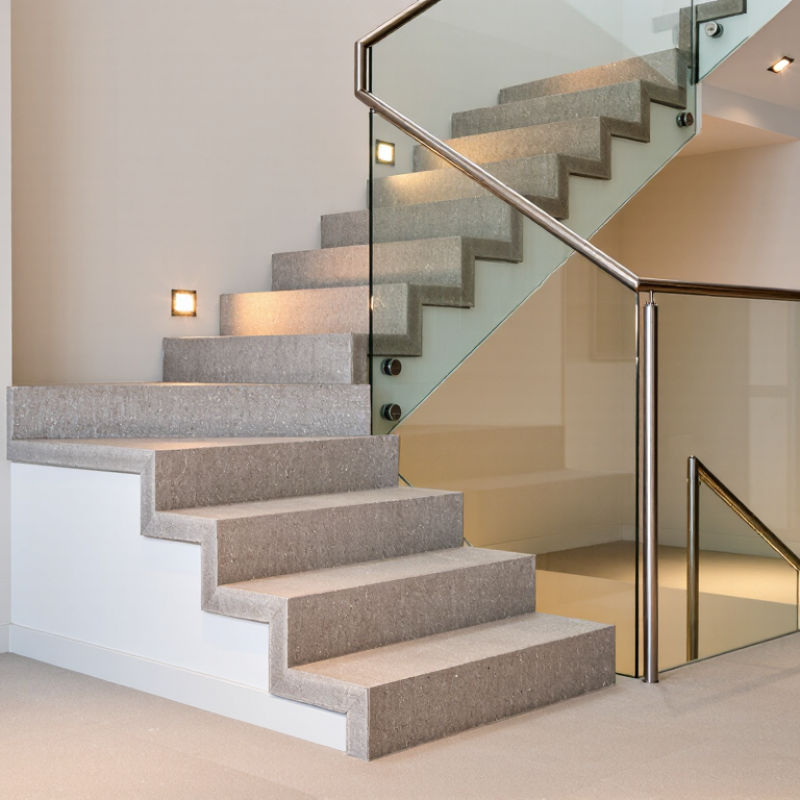
An SPC staircase uses rigid-core flooring to cover existing stair steps. SPC means stone plastic composite. Its core blends mineral filler with polymer, creating a dense, dimensionally stable board. A decorative film provides the wood or stone appearance. A transparent wear layer protects the surface from scratches and daily abrasion.
SPC does not replace the stair structure. It acts as a finished surface. Installers cut each tread and riser carefully, then secure them with suitable adhesive and a fitted stair nosing. The nosing protects the front edge, where shoes create repeated impact. The subfloor must be dry, level, clean, and firmly attached. Uneven steps can transfer stress into the boards. That mistake is easy to overlook.
Water resistance helps with damp shoes and routine cleaning. It does not make open joints permanently waterproof. At corners, walls, and landings, accurate sealing remains important. Manufacturer installation trials often recommend acclimating materials indoors before cutting. Real job sites are less controlled, unfortunately.
Mordor Intelligence’s 2024 flooring review identifies rigid-core products as a growing segment within resilient flooring. Grand View Research also reports continued expansion in resilient flooring demand through the decade. These market reports indicate stronger interest, not guaranteed performance. On stairs, traction, edge security, and correct fitting matter more than attractive samples. A glossy surface may look impressive under showroom lights. It can feel different under a wet sole.
A high-quality SPC staircase begins with a stable core, not a fashionable surface. Grand View Research’s 2024 luxury vinyl flooring analysis forecasts approximately 7.7% annual market growth through 2030. That expansion increases choice, but it also makes technical checking more important.
Check the core density and thickness first. A rigid SPC core should resist denting under concentrated loads. Measure the wear layer, edge squareness, and dimensional change after heat exposure. These details matter near sunny windows and heated rooms.
The WHO reports about 684,000 fatal falls worldwide each year. Therefore, stair safety cannot depend on appearance alone. Look for tested slip resistance, secure stair nosing, and a clearly defined tread profile. A glossy finish may look elegant. It can become unforgiving when wet.
Third-party laboratory reports should identify test methods and actual results. Ask about abrasion, impact, fire performance, and formaldehyde emissions. Installation quality also matters. Poorly prepared risers can create hollow spots, movement, or visible gaps.
In my site experience installers often focus on matching patterns and overlook subfloor flatness. That mistake is expensive to correct.
A 2024 flooring market review by The Freedonia Group also highlights renovation demand and resilient flooring growth, but market growth does not guarantee product quality. My checklist is useful, not perfect. Real stair traffic, cleaning habits, and household humidity still deserve careful review.
Comparing SPC staircase materials requires more than checking color and price. Stone-plastic composite offers moisture resistance, stable dimensions, and simple cleaning. Look for a dense core, a reliable wear layer, and tested surface adhesion. Grand View Research projects the global resilient flooring market to grow at about 6.1% annually from 2024 to 2030. That growth reflects demand for durable surfaces, but it does not guarantee every SPC product performs equally. Ask for abrasion, slip-resistance, and fire-performance test results. Certificates matter.
Design affects daily safety. A closed riser can reduce visual confusion, while a contrasting nosing helps users judge each step. Avoid glossy finishes near entrances. Wet footprints can become dangerous.
The World Health Organization reports approximately 684,000 fatal falls worldwide each year, making stair visibility and grip practical priorities.
Confirm consistent tread depth, secure edge profiles, and adequate lighting. In my own material comparisons, I focused too heavily on texture at first. That was a mistake. A beautiful surface cannot correct poor installation.
Tips: Compare samples under warm and daylight lighting. Check the stair edge by hand. It should feel firm, not sharp. Request installation tolerances in writing. Leave expansion space where the manufacturer requires it. Do not assume thicker SPC always means safer stairs. Test the complete system, including adhesive, nosing, and subfloor preparation. Think about children, older adults, socks, and wet shoes. Some decisions remain uncertain without on-site testing.
Choosing the best SPC staircase in 2026 starts with your space, not a product picture. Measure the stair width, riser height, landing depth, and available headroom. Uneven steps need careful assessment before ordering materials. I have seen attractive finishes fail when dimensions were guessed. Do not repeat that mistake. Check whether the staircase connects to a damp entrance, bright window, or busy hallway. These conditions affect surface wear, colour stability, and cleaning needs.
Select a finish that suits daily movement. A textured surface can improve traction, but deep texture may hold dust. Choose an oak, stone, or solid colour after viewing a physical sample. Screens can distort colour. The core should offer dimensional stability, while the tread profile must fit the existing structure securely. Ask the installer about edge protection, expansion space, underlay compatibility, and repair procedures. Qualified installation matters as much as material quality. Local building and safety requirements should guide the design.
Tips: Bring room photos and exact measurements to the supplier. Compare samples in morning and evening light. Test a small area first, if possible. Keep spare pieces for future repairs. This is easy to overlook. Review the final layout with an experienced installer before cutting. A cheaper option may reduce initial costs, yet awkward joints or poor grip can create bigger problems later. I would also question any claim promising zero maintenance. Every staircase needs inspection and sensible care.
A practical evaluation framework for choosing the right SPC staircase for your space.
The 0–10 scores represent the recommended importance of each selection factor for a typical residential staircase. Prioritize slip resistance, dimensional fit, water resistance, and wear durability, then confirm the product’s technical datasheet and local building requirements before installation.
Installing an SPC staircase starts with the steps, not the cartons. Measure every tread, riser, and nose separately; older stairs rarely repeat. Remove dust, loose paint, and high spots, then check the substrate with a straightedge. Any dampness or movement needs correction before covering. Let the SPC material acclimate indoors according to the installation instructions. Read those instructions carefully. Temperature changes can affect the final fit.
For a secure installation, use an adhesive approved for stair applications and the existing substrate. Apply it evenly, especially near the front edge. Keep joints tight, but allow the movement gap specified by the product instructions. Press each piece firmly and remove adhesive immediately. Do not rely on uneven stairs to “settle” beneath the material. That shortcut often creates hollow spots, squeaks, or lifted nosings. Cut carefully around walls and rail posts. A clean template saves material and reduces visible mistakes.
Maintenance is simple when grit is controlled. Sweep or vacuum regularly, then use a lightly damp microfiber mop with a pH-neutral cleaner. Never flood the steps or use abrasive powder. Add felt pads beneath nearby furniture and avoid dragging heavy objects across the nosing. Inspect the front edges every few months. If an edge lifts, stop using that step and repair it promptly with a compatible method. Small issues are easier to correct. Even experienced installers can miss one uneven riser, so a final inspection from both the side and front is worth the extra time.
| Evaluation Dimension | Recommended Data or Typical Range | How to Choose | Installation and Maintenance Notes |
|---|---|---|---|
| Core Construction | Rigid stone-polymer composite core, commonly made with PVC and mineral filler. | Select a structurally rigid product with documented dimensional stability and consistent thickness. | The SPC surface is a finish layer, not a replacement for a sound stair structure. Repair loose, cracked, or uneven steps first. |
| Overall Product Thickness | Many rigid-core flooring products are approximately 4–8 mm thick, excluding separate stair nosing and underlayment. | Match the thickness to the existing stair profile, adjacent flooring, and available nosing system. | Avoid creating a raised trip edge. Dry-fit every tread, riser, and nosing before applying adhesive. |
| Wear Layer | Common residential wear layers are about 0.20–0.30 mm; heavier-use products may use approximately 0.50 mm. | Choose a thicker wear layer for busy households, rental properties, pets, or frequent shoe traffic. | The wear layer improves abrasion resistance but does not make the stair surface scratch-proof. |
| Slip Resistance | Use a product with published slip-resistance test results suitable for interior stair use; performance varies by surface texture and test method. | Prefer a lightly textured, matte surface instead of a highly polished finish, especially for homes with children or older occupants. | Keep treads dry and free of polish, grease, and loose rugs. Add a code-compliant nosing or contrast strip where required. |
| Stair Tread Depth | A common U.S. residential reference is a minimum tread depth of 10 in (254 mm), measured according to the applicable code. | Do not select a covering that reduces the existing usable tread below the local requirement. | Measure from the nosing to the required reference line. Local building regulations may differ from U.S. model-code values. |
| Riser Height | A common U.S. residential reference is a maximum riser height of 7 3/4 in (196 mm). | Calculate the finished floor height after adding the SPC tread, adhesive, and nosing. | Keep risers as uniform as possible. Uneven riser heights can create a tripping hazard and may fail inspection. |
| Riser Uniformity | Many U.S. residential code references limit variation within a flight to 3/8 in (9.5 mm). | Measure every step rather than using one stair as the template for the entire staircase. | Use accurate shims or leveling compound where permitted, and confirm the finished dimensions before permanent installation. |
| Nosing Design | Use a stair-specific, securely bonded nosing that is compatible with the SPC covering. | Choose a rounded or eased profile with sufficient visual contrast and a firm, non-sharp edge. | Do not rely on a floating click-lock connection at the stair edge. Stair coverings normally require full-spread adhesive and mechanical stability. |
| Subfloor Flatness | Follow the product instructions; many rigid-flooring systems use a flatness tolerance around 3/16 in over 10 ft (4.8 mm over 3.05 m). | Select a system only after checking for dips, high spots, loose boards, protruding fasteners, and moisture damage. | Sand high areas and repair low areas with a compatible leveling or patching material. Never install over movement or structural defects. |
| Adhesive Selection | Use a flooring adhesive specifically approved for rigid PVC/SPC stair applications and the actual substrate. | Check open time, working temperature, substrate compatibility, and curing requirements in the technical data sheet. | Apply the adhesive evenly, maintain the stated spread rate, and keep the staircase free from traffic until the adhesive has cured. |
| Acclimation and Job-Site Conditions | Many SPC products are acclimated indoors for about 48 hours, but the manufacturer’s instructions control. | Store cartons flat in a dry, enclosed area and protect them from direct sunlight and extreme temperature changes. | Install only when the substrate and room conditions fall within the adhesive and flooring specifications. |
| Moisture Control | SPC is water-resistant, but the subfloor, adhesive, joints, and stair structure still require moisture control. | Do not use SPC to conceal dampness, leaks, or water-damaged wood. | Clean spills promptly, repair leaks, and follow the adhesive manufacturer’s moisture limits for concrete or other mineral substrates. |
| Installation Method | For stairs, a fully bonded installation is generally more stable than a floating installation. | Choose a stair-rated installation system that includes tread, riser, nosing, adhesive, and edge details. | Remove dust, cut accurately, bond each component firmly, and roll or press surfaces as directed to eliminate voids. |
| Expansion and Movement | Rigid-core products have lower expansion than many wood products, but movement allowances still depend on the system and installation method. | Follow the specified perimeter and transition details rather than assuming SPC requires no movement allowance. | Do not trap the covering against walls, trim, or adjacent flooring when the installation instructions require a gap. |
| Cleaning Routine | Dry sweep or vacuum regularly; use a slightly damp microfiber mop for routine cleaning. | Select a surface that can be cleaned with the neutral cleaner recommended for resilient flooring. | Avoid flooding the stairs, abrasive powders, steam cleaners unless expressly approved, wax, and solvent-based products. |
| Scratch and Impact Protection | SPC resists routine wear but can be scratched by grit, sharp objects, or dragging heavy items. | Choose a realistic texture and color that can disguise minor dust and everyday marks. | Use entrance mats on nearby floors, keep grit off the steps, and lift furniture instead of dragging it across the staircase. |
| Inspection Frequency | Perform a visual check monthly and after any impact, water event, or unusual movement. | Prioritize products with replaceable or repairable stair components where long-term serviceability matters. | Check nosings, edges, adhesive bonds, seams, surface damage, and handrails. Repair loose or damaged parts promptly. |
| Code and Safety Verification | Stair requirements vary by country, state, municipality, occupancy type, and building classification. | Confirm tread depth, riser height, handrail, guard, landing, lighting, and slip-resistance requirements with the local authority. | The installer and property owner should verify the finished staircase before use. Local regulations take priority over general reference values. |
Note: Dimensions shown as common reference values are not universal code requirements. Always follow the current local building regulations and the flooring, adhesive, and stair-nosing installation instructions.
Check the core density and thickness before choosing color. A rigid core should resist dents from concentrated loads.
Look for tested slip resistance, secure nosing, and consistent tread depth. A glossy surface may become slippery when wet.
Nosing defines the step edge and helps users place their feet. It should feel firm, not sharp.
Request laboratory reports showing abrasion, impact, fire performance, and emissions results. Check the test methods, not only the certificate title.
No. Thickness alone does not guarantee grip or stability. The complete system matters, including adhesive, nosing, and subfloor preparation.
Uneven risers may create hollow spots, movement, or visible gaps. Prepare the subfloor carefully and confirm installation tolerances in writing.
A closed riser can reduce visual confusion. A contrasting nosing may help users judge each step, especially under weak lighting.
View samples under daylight and warm lighting. Touch the stair edge and inspect it near a window.
Consider children, older adults, socks, wet shoes, cleaning habits, and humidity. Real use can expose weaknesses that samples hide.
No checklist is perfect. My early comparisons focused too much on texture, and that was a mistake. On-site testing still matters.
Choosing the best Spc Staircase in 2026 requires more than selecting an attractive finish. An SPC staircase is built with a stone-plastic composite structure that offers dimensional stability, moisture resistance, durability, and a consistent surface for residential or commercial use. A high-quality option should provide strong wear resistance, reliable slip performance, accurate dimensions, secure edge treatment, and a design that complements the surrounding floor and interior style. When comparing materials, consider core density, surface texture, color, stair nosing, acoustic comfort, and overall safety rather than focusing only on appearance or price.
The right Spc Staircase should match your space, traffic level, lighting, layout, and installation conditions. Before purchasing, confirm measurements, subfloor flatness, stair dimensions, and compatibility with available accessories. Professional installation can help ensure stable fitting, precise alignment, and safe transitions between steps. Regular maintenance is simple: remove dust and grit, clean with a lightly damp mop and suitable neutral cleaner, and inspect edges or joints periodically. With thoughtful selection, careful installation, and routine care, an SPC staircase can deliver long-lasting performance, comfort, and modern visual appeal.

Senli New Material