How to Choose Rigid SPC Vinyl Flooring for Your Project?

Time:2026-10-28 Author:Mason
0%

Choosing Rigid Spc Vinyl Flooring is not simply a color decision. It is a project decision involving subfloor condition, room use, moisture, traffic, and installation skill. A pale oak plank may brighten a narrow hallway, while a darker textured finish can hide marks near an entry door. The details matter.

Flooring educator Tom Jennings states, “The floor is only as good as the installation beneath it.” That principle deserves attention. Even a strong SPC core can perform poorly over dust, moisture, or uneven concrete. Before comparing samples, inspect the subfloor with a straightedge, check room humidity, and confirm the manufacturer’s installation requirements. Do not assume every rigid plank handles bathrooms, sunrooms, or commercial traffic equally well.

Look beyond thickness alone. Review the wear layer, click-lock design, attached underlayment, dimensional stability, warranty limits, and available repair options. Ask whether the product has credible emissions documentation and whether its performance claims are independently supported. A thicker plank is not automatically the better choice.

Measure carefully.

Allow for waste.

A small mistake can become expensive.

Experience also exposes an uncomfortable truth: the most attractive product may not suit the building. A rigid floor installed over a moving or damp base may develop gaps, noise, or joint stress. Therefore, the right Rigid Spc Vinyl Flooring should balance appearance, verified performance, site conditions, and installation quality—not showroom appeal alone.
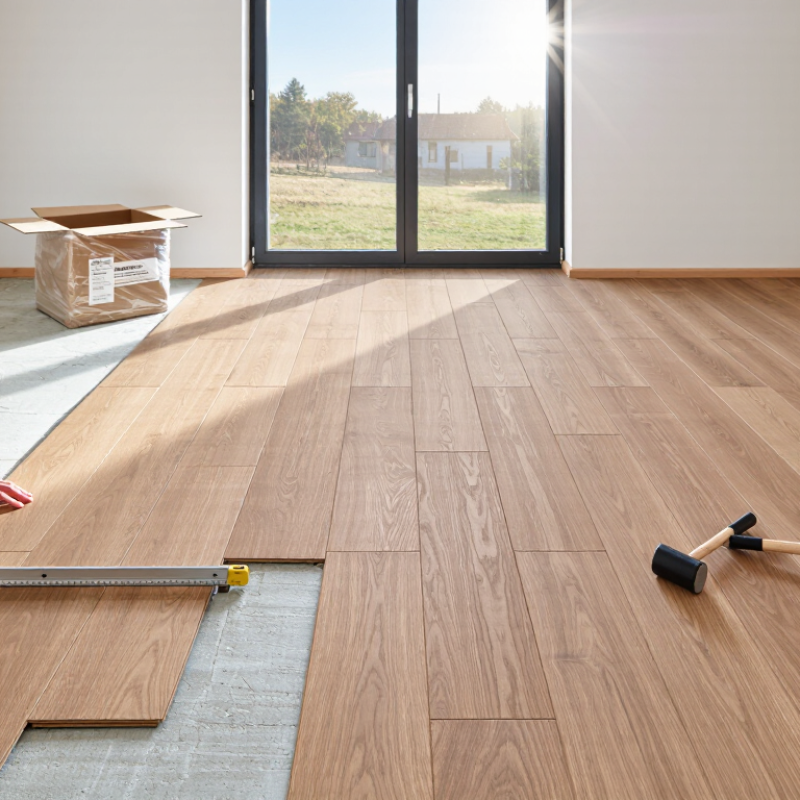
How to Choose Rigid SPC Vinyl Flooring for Your Project?

Define Rigid SPC Vinyl Flooring and Its Core Construction

Rigid SPC Vinyl Flooring: Core Construction for Project Decisions

Rigid SPC vinyl flooring is a multilayer resilient floor with a stone-plastic composite core. The core commonly combines calcium carbonate, PVC, and stabilizers. This dense layer supports dimensional stability under changing temperatures. A printed décor film creates the wood or stone appearance. A transparent wear layer protects the surface from scuffs and everyday abrasion. Many products also include an attached acoustic pad.

It feels solid. That distinction matters. Unlike flexible vinyl, SPC resists indentation more effectively when the subfloor is reasonably flat. ISO 10582 classifies resilient PVC floor coverings by construction and performance requirements. However, installers should still follow the product’s stated tolerance. A rigid board cannot hide every uneven joint or hollow spot.

Market data shows why this category deserves careful evaluation. Fortune Business Insights valued the global vinyl flooring market at about 36.3 billion dollars in 2023. Grand View Research also projects continued growth for luxury vinyl flooring through 2030. These reports group several product types together, so their figures do not prove SPC quality. They only show expanding demand. Check the core thickness, wear-layer rating, locking profile, slip performance, and emissions documentation. I would also inspect a sample beside a window. Color can look different under daylight. A stronger core is not automatically the best choice. A thinner, well-installed board may outperform a thicker product over an uneven floor.

Assess Project Requirements, Room Conditions, and Traffic Levels

Choosing rigid SPC vinyl flooring starts with the project, not a sample color. Measure each room, including alcoves and door clearances. Record moisture risks, subfloor level, sunlight, and expected foot traffic. Kitchens need spill-resistant surfaces and stable locking joints. Bathrooms demand careful water-management planning around edges. Busy hallways need a durable wear layer and texture that hides grit. I have learned that attractive flooring can fail when daily routines are ignored.

Room conditions also affect installation decisions. Concrete subfloors should be clean, dry, and sufficiently flat. Uneven areas can create movement, noise, or separated joints. Check installation tolerances and local building requirements before work begins. In sunny rooms, use suitable window coverings and follow expansion-gap guidance. Cold storage areas may need acclimation, depending on the product instructions. This detail is easy to miss. It should not be.

Tips: Match the wear layer to traffic, but do not choose thickness by habit alone. Count children, pets, rolling chairs, footwear, and furniture movement. Request technical data, warranty terms, and care instructions from a reputable supplier. Keep extra planks for future repairs. I once underestimated entryway grit. The floor looked fine, but the surface showed wear sooner than expected. A site inspection would have changed that choice.

Compare SPC Flooring Thickness, Wear Layers, and Surface Finishes

How to Choose Rigid SPC Vinyl Flooring for Your Project?

SPC flooring thickness affects comfort, stability, and installation tolerance. A 4 mm plank can suit smooth, well-prepared floors. Thicker 5–7 mm boards feel firmer underfoot and hide minor subfloor irregularities better. However, extra thickness cannot correct serious dips or moisture problems. I have seen thick planks fail when the subfloor was poorly leveled. Measure the floor carefully before comparing samples.

The wear layer protects the printed design from traffic and abrasion. For bedrooms, a 0.3 mm layer may provide practical protection. Busy kitchens, hallways, and small offices often benefit from 0.5 mm. Higher-use commercial areas may require 0.7 mm, subject to verified specifications. Do not judge durability from thickness alone. Ask for documented test results, installation instructions, and cleaning limits. A confident sales claim is not technical evidence.

Surface finish changes both appearance and daily maintenance. Embossed textures can resemble oak grain and improve grip, but deep textures may hold dust. Matte finishes reduce glare and usually look more natural beneath strong window light. A lightly textured surface may clean more easily than a heavily brushed one. Touch samples with dry and damp shoes. That small test matters. I sometimes prefer a less realistic finish because it feels calmer and cleans faster. Still, lighting can change the choice, so inspect samples in the actual room.

How to Choose Rigid SPC Vinyl Flooring for Your Project?

Compare representative SPC flooring specifications by total thickness, wear-layer thickness, and surface finish.

Residential: 4 mm total thickness with a 12 mil wear layer and matte embossed finish.
High-Traffic Residential: 5 mm total thickness with a 20 mil wear layer and wood-grain embossed finish.
Light Commercial: 6.5 mm total thickness with a 20 mil wear layer and registered embossed finish.
Heavy Commercial: 8 mm total thickness with a 28 mil wear layer and wire-brushed embossed finish.

Thicker planks can provide greater dimensional stability and improved resistance to subfloor imperfections, while a thicker wear layer generally offers better protection against scratching and abrasion. Surface finish affects appearance, texture, slip feel, and cleaning requirements. Actual specifications vary by product and installation conditions.

Select Suitable Styles, Sizes, Textures, and Installation Methods

How to Choose Rigid SPC Vinyl Flooring for Your Project?

Choosing rigid SPC vinyl flooring starts with the room’s function, not a showroom trend.

In renovation work, I have seen pale oak styles make narrow rooms feel wider. Darker stone patterns can suit entryways, kitchens, and commercial spaces. Match the visual direction with fixed features, such as cabinets, doors, and wall colors. Avoid copying a sample image blindly. Lighting changes everything.

Size affects both appearance and installation efficiency.

Wide planks create fewer visual breaks, while narrower planks may look better in small or irregular rooms. Long boards can make a hallway appear more spacious. Measure the room carefully, including door recesses and awkward corners. Order extra material for cutting and future repairs. A small mistake here becomes expensive.

Texture should support safety and maintenance.

Embossed surfaces can resemble real timber and improve underfoot grip, but deep texture may hold dust. Check the wear layer, core thickness, locking profile, and surface rating before purchasing. For installation, click-lock flooring works well on a clean, level subfloor. Glue-down options can provide stronger movement control in large areas or busy spaces. Follow the manufacturer’s expansion-gap requirements, and allow the planks to acclimate when specified. I once underestimated subfloor unevenness, and the finished floor revealed it clearly. That lesson still matters.

Verify Quality Standards, Maintenance Needs, and Total Project Cost

How to Choose Rigid SPC Vinyl Flooring for Your Project?

Rigid SPC vinyl flooring should be judged beyond color, texture, and showroom lighting. Check documented quality standards relevant to your market, such as ASTM or EN test methods. Ask for wear-layer thickness, dimensional stability, slip resistance, and formaldehyde emission information. A reliable supplier should provide current test reports, not vague claims. Inspect several planks yourself. Look for clean locking edges, consistent printing, and a firm, dense core.

Maintenance affects the real project cost. Choose a surface that handles your expected traffic, moisture, and cleaning routine. In a busy hallway, fine dust can act like sandpaper under furniture. Use entrance mats, felt pads, and manufacturer-approved cleaners. Avoid excessive water, even with water-resistant flooring. Installation costs also include subfloor preparation, underlayment, trims, transitions, delivery, and cutting waste. Allow roughly five to ten percent extra material, although unusual room shapes may require more. My practical mistake was estimating only the plank price once; the final invoice told a different story.

Tips: Request a physical sample. Test it beside windows and indoor lighting. Confirm subfloor moisture limits before installation. Compare warranties carefully, because coverage may exclude poor installation or commercial traffic. Keep spare planks for future repairs. Small details matter. A cheaper floor can become expensive when joints fail, trims mismatch, or preparation is skipped. Recheck every assumption before ordering.

How to Choose Rigid SPC Vinyl Flooring for Your Project? - Verify Quality Standards, Maintenance Needs, and Total Project Cost
Project Profile Recommended SPC Construction Typical Wear Layer Quality Documents and Tests to Verify Maintenance Demand Expected Service Considerations Indicative Installed Cost* Best-Fit Assessment
Light Residential 4–5 mm rigid core with attached underlayment; floating click installation over a flat, dry subfloor 12 mil / approximately 0.30 mm Product technical data sheet; dimensional stability testing; slip-resistance information; indoor-air-emissions documentation; installation instructions Sweep or vacuum regularly; damp mop with a pH-neutral cleaner; use felt pads under furniture Suitable for bedrooms, living rooms, and low-traffic areas. Protect from heavy point loads and prolonged direct sunlight. $3.50–$7.00 per sq. ft. Value-focused
Standard Residential 5–6.5 mm rigid core with a stable locking profile and integrated underlayment 20 mil / approximately 0.50 mm ASTM F3261 or equivalent rigid-core flooring classification; ASTM F2199 dimensional stability; ASTM F925 chemical resistance; indoor-air-emissions report Routine dry cleaning and damp mopping; promptly remove standing water and abrasive debris Appropriate for kitchens, hallways, family rooms, and homes with pets. Expansion gaps and subfloor flatness must follow the installation instructions. $4.50–$9.00 per sq. ft. Balanced choice
High-Traffic Residential 6–7.5 mm rigid core with a reinforced click system and a higher-density protective surface 20–30 mil / approximately 0.50–0.75 mm Wear-resistance results; stain and chemical-resistance testing; locking-strength data; dimensional stability; slip-resistance information; emissions documentation Frequent vacuuming in entry areas; damp mop as needed; use entrance mats and non-staining protective pads A strong option for active households, pets, and busy circulation zones. Heavy appliances should be moved with load-distributing protection. $5.50–$11.00 per sq. ft. Durability priority
Light Commercial 5–7 mm rigid core designed for regular foot traffic; commercial-rated surface and locking system 20–30 mil / approximately 0.50–0.75 mm ASTM F3261 or equivalent; ASTM F1700 classification where applicable; commercial wear and stain testing; fire-test documentation; slip-resistance data; emissions report Daily dust removal in traffic lanes; scheduled damp mopping; use compatible neutral cleaners and replace worn entrance mats Suitable for small offices, boutique retail, and low-intensity hospitality areas when permitted by the product warranty and local regulations. $6.00–$13.00 per sq. ft. Verify warranty scope
Moisture-Prone Interior Water-resistant SPC plank with sealed surface and manufacturer-approved waterproof joint system 20 mil / approximately 0.50 mm or higher Water-resistance or waterproof-joint test details; edge-sealing instructions; subfloor moisture limits; mold-resistance claims supported by test documentation Remove spills promptly; do not use steam mops unless expressly approved; inspect perimeter sealant and transition areas Useful for kitchens, laundry rooms, and entry zones. It does not correct plumbing leaks, hydrostatic pressure, or excessive subfloor moisture. $5.00–$10.50 per sq. ft. Moisture control required
Renovation Over Existing Hard Floor Rigid SPC with a stable click profile; existing floor must be sound, clean, dry, and within the stated flatness tolerance 12–20 mil / approximately 0.30–0.50 mm Subfloor flatness requirement; maximum moisture limits; transition requirements; adhesive or floating-installation restrictions; clearance requirements at doors and cabinets Similar to other SPC floors, but loose tiles, grout irregularities, and uneven areas must be repaired before installation Can reduce demolition work, but excessive unevenness may cause joint stress, movement, or visible telegraphing through the new floor. $3.75–$8.50 per sq. ft. Lower-disruption option

*Indicative 2025–2026 planning ranges in U.S. dollars per square foot, including typical material and installation allowances but excluding major subfloor repair, demolition, furniture moving, complex patterns, stairs, taxes, and regional labor variations. Always confirm the current technical data sheet, installation manual, warranty terms, local building requirements, and complete project quotation before purchase.

FAQS

What should I assess before choosing rigid SPC vinyl flooring?

Measure every room, alcove, doorway, and clearance. Record moisture, sunlight, subfloor flatness, and expected traffic. Measure twice.

How should flooring differ between kitchens, bathrooms, and hallways?

Kitchens need spill-resistant surfaces and stable locking joints. Bathrooms require careful water management around edges. Busy hallways benefit from durable wear layers and textured surfaces.

What subfloor conditions are necessary before installation?

Concrete should be clean, dry, and sufficiently flat. Uneven areas may cause movement, noise, or separated joints. This detail is easy to miss.

How can I select the correct wear layer?

Match it to children, pets, rolling chairs, footwear, and furniture movement. Do not choose thickness by habit alone. My entryway estimate was wrong.

What quality information should a supplier provide?

Request current test reports for relevant ASTM or EN methods. Check wear-layer thickness, dimensional stability, slip resistance, and formaldehyde emissions. Vague claims are not enough.

How can I inspect physical flooring samples?

Examine several planks for clean locking edges, consistent printing, and a dense core. Test samples beside windows and under indoor lighting. Showroom lighting can mislead.

What maintenance helps rigid SPC flooring last longer?

Use entrance mats and felt pads under furniture. Remove fine grit before it acts like sandpaper. Avoid excessive water and use approved cleaners.

What costs should I include beyond the plank price?

Include subfloor preparation, underlayment, trims, transitions, delivery, and cutting waste. Order about five to ten percent extra material. Unusual rooms may need more.

Why should I keep spare planks after installation?

Spare planks help repair future damage without searching for a matching design. Store them safely and keep installation records. Small details matter.

Conclusion

Choosing Rigid Spc Vinyl Flooring begins with understanding its core construction: a strong stone-plastic composite core, decorative surface layer, protective wear layer, and stable backing. This structure provides dimensional stability, moisture resistance, and practical durability for many residential and commercial applications. Before selecting a product, evaluate the project’s room conditions, subfloor, moisture exposure, expected foot traffic, and installation environment.

Compare plank or tile thickness, wear-layer strength, surface finishes, and texture to match performance requirements with visual preferences. Consider suitable colors, patterns, sizes, and installation methods, such as click-lock or adhesive installation, based on the room layout and subfloor condition. Finally, verify product quality standards, dimensional consistency, surface protection, maintenance requirements, and long-term care needs. A complete cost assessment should include materials, underlayment, preparation, installation, waste, and future maintenance, helping you choose flooring that offers balanced performance, appearance, and overall project value.


Mason

Mason

Mason is a seasoned marketing professional with a deep expertise in the company's offerings and a passion for driving brand awareness. With a strong background in digital marketing strategies, he has an innate ability to connect with diverse audiences and effectively communicate product benefits.......