Choosing a floor for wet rooms, busy kitchens, or entryways is about more than resisting water. Buyers also need dependable traction, easy cleaning, and a surface suited to the room’s daily demands. Non Slip Waterproof Flooring can help address these needs, but no finish stays equally safe under every condition. Soap, grease, dust, and worn coatings can change how a floor feels underfoot.
Flooring educator Debbie Gartner’s buyer-focused guidance can be paraphrased as a simple principle: “Judge flooring by how it performs in the room, not by a sample alone.” A small sample may show color and texture, but it cannot reveal how the floor handles muddy shoes or repeated splashes. Ask for product-specific slip-test information, installation requirements, and care instructions. Check whether the stated performance applies to the surface when wet.
Small details matter. Vinyl plank and sheet flooring offer water resistance and varied finishes; porcelain tile is durable, but grout needs attention. Rubber can provide a softer step, though appearance and cleaning needs vary. No option is perfect. That is worth remembering when comparing glossy photos with real-life use. The following guide explores leading choices, practical trade-offs, and questions buyers should ask before selecting Non Slip Waterproof Flooring for their space.
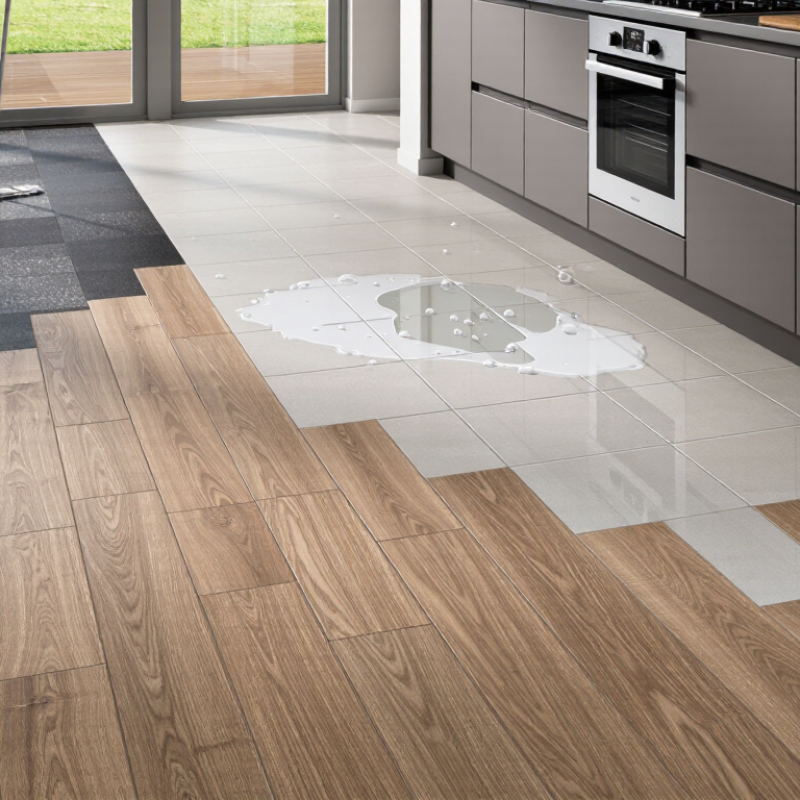
Top Non Slip Waterproof Flooring Options for Buyers
How Slip Resistance and Waterproofing Are Evaluated
Slip resistance is measured under specific conditions, not by appearance alone. A textured surface may feel secure when dry but behave differently with water, soap, or fine dust. Buyers should check which test method was used and whether it reflects the room’s likely conditions. Numbers need context. A test result does not guarantee identical performance in every home.
Waterproofing assessments look beyond the top surface. Evaluators may examine seams, edges, and joints, where water can seep through and reach the subfloor. Some products undergo exposure tests, but test duration and installation details can vary. Check the written test conditions and warranty limits. A water-resistant surface is not automatically a waterproof floor system, especially if seams are poorly fitted. I would also ask how wear affects performance; that detail is easy to overlook.
Tips: Request documented slip-test results for wet conditions, and compare like with like. Check the edges. Inspect sample pieces for deep grooves that may collect grime, and ask how the floor should be cleaned. Confirm that the recommended underlayment and installation method match the test information. If results seem vague, ask the seller for the test standard and report.
How slip resistance and waterproofing are evaluated
Tile water absorption classes are based on ASTM C373: impervious tile absorbs 0.5% or less, vitreous tile absorbs more than 0.5% up to 3%, and semi-vitreous tile absorbs more than 3% up to 7%. Non-vitreous tile absorbs more than 7%. For slip resistance, ANSI A326.3 measures wet dynamic coefficient of friction (DCOF); 0.42 is the minimum benchmark for many level interior spaces expected to be walked on when wet. A test result is not a guarantee against slipping—consider surface texture, cleaning, footwear, and the conditions where the flooring will be used.
Textured porcelain tile is a durable choice for bathrooms, laundry rooms, and entryways. Its dense body absorbs very little water, while a textured surface can improve grip underfoot. Still, grout lines need regular cleaning, and a rough finish may feel less comfortable on bare feet. Look for product information that identifies slip performance for wet areas; appearance alone tells you little.
Waterproof vinyl flooring comes in planks, tiles, and sheets. Planks can resemble wood, while sheet flooring has fewer seams where water might collect. Many options feel warmer and softer than tile. However, surface texture and wear layers vary, so “waterproof” does not automatically mean slip-resistant. Rubber flooring is another option for utility spaces and some home gyms. It offers a cushioned feel and can provide traction, but may not suit every room’s look. Trade-offs are real.
Tips: Ask for wet-area slip data, not just a “non-slip” label. Check sample pieces with damp shoes, and inspect seams and edges. Small tests help, though they cannot fully predict years of wear. Keep the floor clean; soap residue can make even textured surfaces slippery.
Textured porcelain tile often offers strong wear resistance and predictable cleaning, but grout lines need regular attention. Its surface can feel secure under wet feet, yet soap residue may still create a hazard. Ask for slip-test information suited to the room, since ratings and test conditions vary. That detail matters. Installation can raise the upfront cost, especially when the subfloor needs repair.
Waterproof vinyl plank usually costs less and feels warmer underfoot. Its wear layer can handle everyday spills, though sharp grit may scratch it over time. Rubber flooring offers a softer, grippy surface for laundry rooms or workshops, but it may cost more and show dents beneath heavy appliances. I would not judge safety from a sample held dry in a showroom. Check the floor when damp, and inspect seams and edges. Small gaps can let water reach the subfloor, even when the surface itself resists moisture. Consider cleaning effort, replacement costs, and how the room is actually used before choosing.
| Flooring Option | Water Resistance | Wet-Surface Safety | Durability and Maintenance | Typical Installed Cost (USD per sq. ft.) | Best Suited For |
|---|---|---|---|---|---|
| Textured porcelain tile | Porcelain tile has very low water absorption; grout joints may need sealing and routine care. | Textured finishes can improve traction. Check product-specific wet slip-test data; smooth tile can be slippery when wet. | Highly resistant to wear, moisture, and stains. Long-lasting, but grout needs cleaning and tiles can crack if the substrate moves or suffers impact. | $8–$20 | Bathrooms, entryways, kitchens, and other areas where hard-wearing tile is preferred. |
| Waterproof luxury vinyl plank (LVP) | Many products have waterproof plank cores and surfaces, but water can pass through seams or edges if installation is not properly detailed. | Surface texture and wet traction vary by product. Verify test results rather than relying on a “slip-resistant” description alone. | Comfortable underfoot and generally easy to clean. Can be scratched or dented, and prolonged heat or direct sunlight may affect some products. | $4–$12 | Living areas, kitchens, and bathrooms when the product and installation are approved for the location. |
| Textured sheet vinyl | The continuous surface is highly water-resistant; seams, edges, and penetrations still require proper installation. | Textured or slip-resistant finishes are available, but traction differs by product and may decrease with soap, grease, or residue. | Resilient and easy to clean, with few seams. Sharp objects can tear or gouge the surface; repairs may be conspicuous. | $3–$8 | Bathrooms, laundry rooms, and budget-conscious renovations requiring a low-seam surface. |
| Rubber flooring | Rubber surfaces resist water, but seams, joints, and perimeter details determine whether the installed floor prevents water penetration. | Often offers good grip and cushioning; performance depends on the surface profile, product, and contaminants present. | Durable and comfortable for standing. Needs cleaning with compatible products; oils and some chemicals can damage certain formulations. | $5–$15 | Utility rooms, home gyms, and other spaces where cushioning and traction are priorities. |
| Epoxy floor coating with anti-slip aggregate | A properly prepared and installed coating can form a water-resistant, seamless surface over a suitable substrate. | Anti-slip aggregate can add texture. A smooth coating may be slippery when wet, and more texture can make cleaning harder. | Resists abrasion and many chemicals when correctly specified and installed. Surface preparation is critical; damaged coatings may need repair or recoating. | $4–$12 | Garages, workshops, and utility areas with a sound concrete base. |
Cost and safety note: Installed-cost ranges are approximate U.S. estimates and vary with location, subfloor preparation, product quality, and labor. No flooring is slip-proof. For level interior areas expected to become wet, ANSI A326.3 provides a wet dynamic coefficient of friction test method; a test result is not a guarantee of safety in every condition. Confirm the intended-use rating with the manufacturer and consider water, soap, grease, footwear, cleaning, and installation details.
Match flooring to the room, not just its appearance. Bathrooms need surfaces that tolerate frequent splashes, while textured tile or suitable waterproof resilient flooring can offer better grip than a polished finish. Small details matter. Check wet-slip information and installation requirements; grout, seams, and poor drainage can affect performance. In kitchens, consider dropped utensils, cooking spills, and how easily crumbs collect in textured surfaces. A floor that feels secure underfoot but takes ages to clean may become frustrating.
Households with children, older adults, or pets may value a slightly cushioned surface and clear transitions between rooms. In entryways, water and grit arrive together, so durable flooring and a washable mat can help protect the surface. Test it wet. A showroom sample cannot fully show how a floor feels under damp feet or in your home’s lighting. There is no perfect option: deeper texture may improve traction, yet hold more dirt. Check subfloor compatibility and maintenance instructions before buying, and ask an installer about moisture risks in the specific room.
A slip-resistant waterproof floor depends on careful installation, not just its surface texture. Start with a clean, dry, level subfloor; dust or old adhesive can prevent secure bonding. Check moisture levels before laying the flooring, especially over concrete. Follow the product’s instructions for adhesive, expansion gaps, and curing time. Rushing this step can leave loose edges where water may collect. Small details matter.
Fit seams tightly and seal them only with materials approved for that flooring. Around tubs, sinks, and laundry machines, inspect edges closely. A neat-looking seam is not always watertight. If the room has a floor drain, preserve the intended slope rather than covering it with extra layers. Let adhesives cure fully before washing the floor or moving heavy furniture.
Daily care helps preserve grip. Wipe spills promptly, including soapy water, which can make textured surfaces slick. Use a soft mop and a cleaner recommended for the flooring; wax or oily polish may leave a slippery film. Avoid abrasive pads that can wear down the surface. Not always obvious. Check corners and seams every few weeks for lifting, gaps, or trapped moisture. Replace damp rugs, and choose ones with a compatible, non-staining backing. A little routine attention is easy to skip, but missed leaks can quietly damage the floor beneath.
Textured porcelain tile, waterproof vinyl, and rubber flooring are common options. Each has trade-offs.
No. Waterproofing resists moisture, but grip depends on the surface and its condition. Soap residue can make textured floors slick.
It absorbs little water and handles wear well. Grout needs regular cleaning, and rough tile may feel uncomfortable under bare feet.
Planks can resemble wood and feel warmer than tile. Sheet flooring has fewer seams where water can collect.
Ask for wet-area slip data, not just a “non-slip” label. Test a sample with damp shoes, but remember that one test cannot predict years of wear.
It offers a cushioned, grippy surface. It may not match every room, and heavy appliances can leave dents.
Start with a clean, dry, level subfloor. Fit seams tightly, inspect edges, and let adhesives cure fully before washing.
Wipe spills and soapy water promptly. Use a soft mop and approved cleaner; wax or oily polish can leave a slippery film.
Check them every few weeks for gaps, lifting, or trapped moisture. I might skip this when busy, but small leaks can quietly cause damage.
Choosing Non Slip Waterproof Flooring means balancing grip, water protection, durability, and budget. Slip resistance can be assessed through surface texture and performance under wet conditions, while waterproofing depends on how well both the flooring material and its seams resist moisture. Common options include textured tile, resilient sheet or plank flooring, and other water-resistant surfaces, each offering different levels of comfort, upkeep, and longevity. Comparing these features helps buyers select a floor that suits their safety needs and expected use.
The best choice also depends on the room and household. Bathrooms and laundry areas may call for strong moisture protection and reliable traction, while kitchens and entryways benefit from surfaces that are easy to clean and withstand frequent foot traffic. Consider the needs of children, older adults, or pets, as well as installation requirements and total cost. Proper subfloor preparation, careful sealing where needed, prompt cleanup of spills, and routine cleaning can help maintain grip and water protection over time.

Senli New Material